The 50km/h Heart Attack: Inside the “Anti-Racing” Crisis Threatening to Derail Formula 1’s 2026 Era
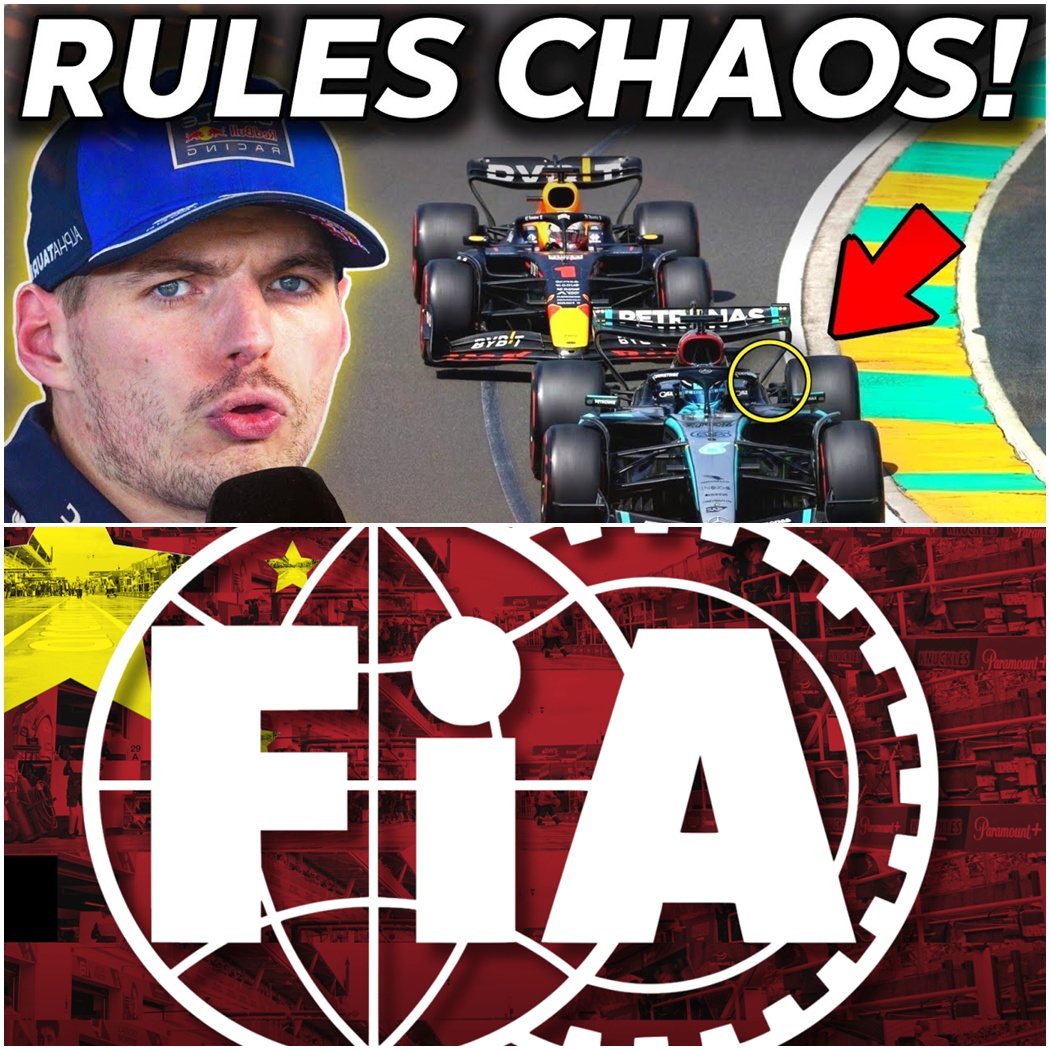
Formula 1 has always been a sport defined by its pursuit of the future, a relentless sprint toward the next great technological horizon. But as the grid prepares for the Chinese Grand Prix in Shanghai, the much-vaunted “2026 Revolution” is facing a crisis of identity that many insiders believe could lead to a full-scale revolt. What was promised as a bold new era of lighter cars and sustainable power has, in the eyes of many drivers, devolved into a dangerous game of “high-speed chess” where software code matters more than raw talent.
The warning signs were impossible to ignore during the season opener in Australia. While fans were treated to a spectacle of seven lead changes in the first nine laps, a deeper, more unsettling story was unfolding beneath the surface. For the first time, the “heart” of a Formula 1 car—its power unit—revealed a fundamental flaw that has left the paddock in a state of shock.
At the center of this controversy is a phenomenon known as “super clipping.” Under the new regulations, F1 cars rely on a radical 50/50 power split between the internal combustion engine and the electric energy recovery system. On paper, doubling the electrical output to 350 kW sounds like a masterstroke of green engineering. In practice, it has created a situation where cars are literally running out of breath.
During qualifying in Melbourne, spectators were baffled to see cars cruising on the straights while drivers were still flat on the throttle. This wasn’t a mechanical failure; it was the car’s software forcing the engine into a generator mode to recharge the battery. When “super clipping” kicks in, the engine stops pushing the car forward and starts siphoning power to the battery. The result? A staggering drop of over 50 km/h in top speed in the middle of a flat-out run. George Russell, the polesitter, found himself downshifting early before Turn 9 just to keep the system alive—a move that goes against every instinct of a world-class racer.
This isn’t just a technical quirk; it’s a philosophical earthquake. Max Verstappen, never one to mince words, has already branded the new rules as “anti-racing,” comparing the experience to “Formula E on steroids.” The three-time world champion’s frustration stems from a feeling that the “purity” of the sport is being eroded. When the fastest lap is determined not by who can brake the latest or carry the most speed through a corner, but by whose software engineers programmed the most efficient energy deployment map, F1 loses its soul.
The human cost of these regulations is even more concerning. Safety has become the primary talking point among drivers, led by a vocal Lando Norris. The McLaren star has warned that the closing speeds between a car using its “overtake boost” and a car stuck in “super clipping” are becoming lethal. We are looking at differences of 30 to 50 km/h mid-corner or on high-speed straights. In a sport where a split-second reaction is the difference between a podium and a hospital bed, these speed differentials are a recipe for disaster.
We already saw the first “near-miss” in Australia, and it had nothing to do with energy recovery. The removal of the MGU-H—the system that previously eliminated turbo lag—has reintroduced a ghost from F1’s past. Without that instant electrical spooling, engines now rely purely on exhaust gases to get the turbo spinning. When Liam Lawson’s car bogged down at the start, it crawled off the line like a stalled road car. Behind him, Franco Colapinto had to perform a miracle of reflex to avoid a massive rear-end collision at nearly 100 mph. It was a terrifying reminder that the 2026 cars are, in some ways, less predictable than their predecessors.
As the circus moves to Shanghai, the pressure on the FIA is reaching a breaking point. The Shanghai International Circuit is a different beast entirely. Unlike Melbourne’s 71% full-throttle lap, Shanghai offers more braking zones, which should, in theory, help energy recovery. The FIA has even increased the energy recovery cap from 7 to 9 megajoules for this weekend in a quiet attempt to mask the “cruising” behavior.
However, Shanghai also features one of the longest straights in the world—a 1.2 km monster leading into Turn 14. This is where the tactical nightmare will truly begin. Drivers now have an “overtake boost” button, which Charles Leclerc jokingly compared to a Mario Kart mushroom. But if you use that mushroom too early, you leave yourself defenseless for the rest of the lap. We could see a bizarre standoff where rivals refuse to attack each other, both waiting for the other to blink and drain their battery first. This “tactical deadlock” is the exact opposite of the aggressive, wheel-to-wheel racing that fans pay to see.
The active aerodynamics controversy only adds fuel to the fire. The new “straight-line mode” (SLM), which allows wings to flatten out to reduce drag, has proven to be unstable in dirty air. In Australia, the FIA actually removed the SLM zones overnight after drivers complained of massive understeer at high speeds, only to reinstate them hours later under pressure from teams. It was a chaotic sequence that revealed a governing body that is just as unsure about the new cars as the drivers are.
So, where does Formula 1 go from here? The Chinese Grand Prix will be the ultimate litmus test. If we see more “super clipping,” more dangerous closing speeds, and more software-dictated results, the political battle in the paddock will explode. Team principals like Andrea Stella have already admitted that these issues are “inherent” in the regulations. This isn’t a “teething problem” that can be fixed with a minor tweak; it’s a fundamental flaw in the DNA of the 2026 era.
Drivers are no longer just athletes; they are being forced to act as energy managers in a high-stakes strategy game. While the FIA argues that this rewards “intelligent racing,” the men in the cockpits feel like they’ve been handed a video game controller instead of a steering wheel. If the Shanghai weekend descends into the “total chaos” many are predicting, the demand for emergency rule changes will become deafening.
Formula 1 has always survived by evolving, but the 2026 revolution may have taken a step too far into the digital unknown. As the lights go out in Shanghai, the question isn’t just who will win the race, but whether the sport can win back the trust of its drivers before someone gets hurt. The 50km/h “heart attack” isn’t just a technical glitch—it’s a warning that the pursuit of the future might be leaving the essence of racing behind.








