The Impossible Three Milliseconds: The Insane Mechanical Genius Inside a Modern Formula 1 Gearbox
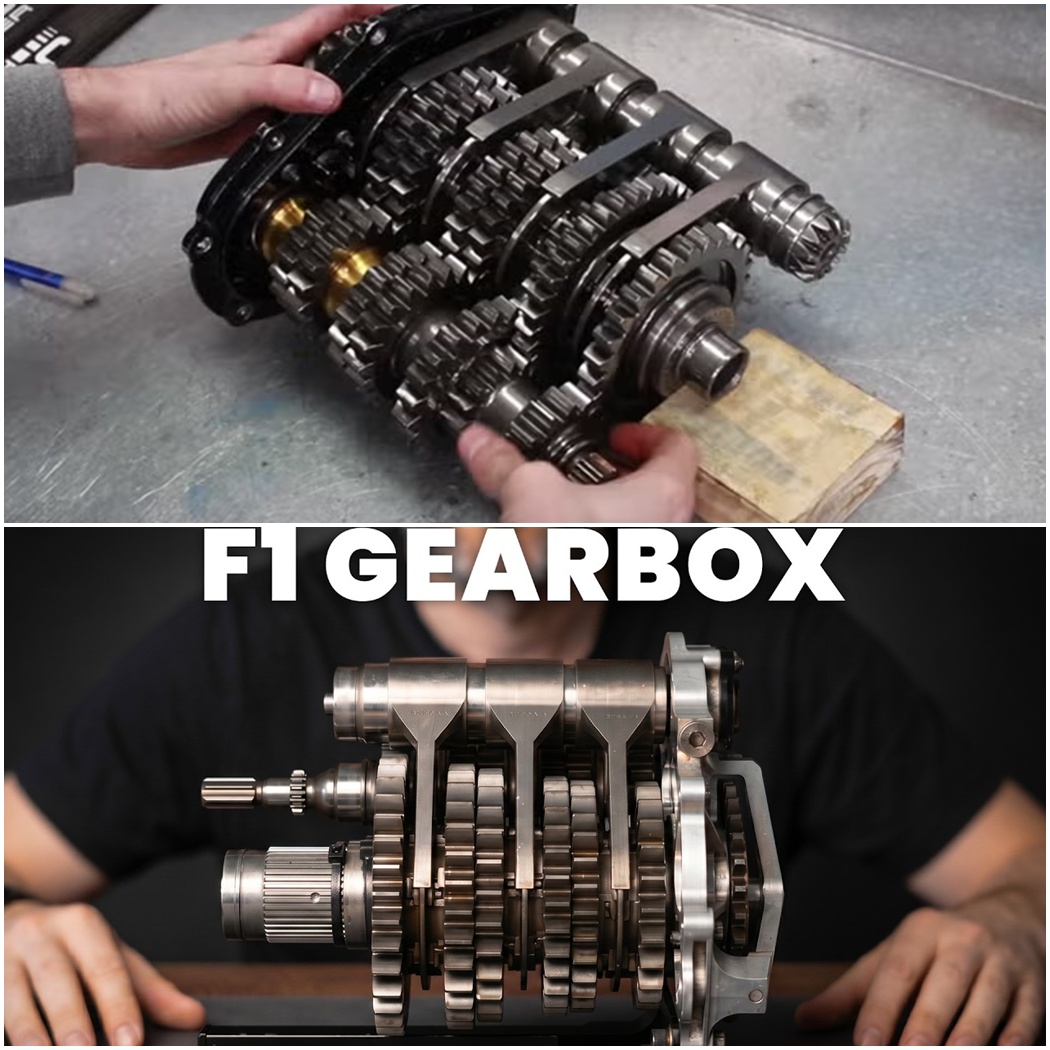
The modern Formula 1 car is widely considered the absolute pinnacle of human engineering. It is an intricate, highly complex symphony composed of lightweight carbon fibre, terrifyingly powerful hybrid systems, and aerodynamic concepts that seem to defy the very laws of physics. We marvel at the cars as they scream through corners at unimaginable speeds, glued to the tarmac by invisible forces. However, buried deep within the chassis, hidden entirely from the fans’ view, lies a piece of mechanical architecture so profoundly complex and ingeniously designed that it effectively achieves the mechanically impossible thousands of times during every single Grand Prix. We are talking about the modern Formula 1 seamless-shift gearbox, a technological masterpiece that requires a truly mind-bending understanding of precision engineering.
To truly appreciate the breathtaking genius of a modern Formula 1 transmission, one must deeply understand the brutal, unforgiving reality of what changing gears used to demand. Let us rewind the clock to the chaotic, dangerous era of the late nineteen-eighties. The physical act of driving a Formula 1 car was akin to wrestling a wild, untamed beast. As a driver approached a tight corner at a blistering one hundred and eighty miles per hour, they were required to execute a complex, highly coordinated physical dance in a matter of mere seconds. The right foot would slam violently onto the heavy brake pedal, fighting the immense G-forces. Simultaneously, the left foot would heavily stamp on the clutch. The driver would then have to physically remove their right hand from the steering wheel—the very thing keeping them out of the barriers—grab a stiff, mechanical gear stick, and forcefully yank it down from fifth gear into fourth.
.jpg?cx=0.5&cy=0.5)
Crucially, during this exact moment, the driver had to intricately roll the side of their braking right foot onto the throttle pedal. This technique, known as ‘heel-and-toe’, was absolutely essential to match the engine revolutions to the slower speed of the incoming gear. If the driver failed to blip the throttle perfectly, the massive engine braking would instantly lock the rear wheels, sending the car spinning violently out of control. Only after perfectly executing this brutal sequence could they release the heavy clutch and finally turn into the corner. And they had to repeat this exhausting process for every single downshift, all while perfectly judging their rapidly decreasing speed and delicately balancing the braking threshold.
It was an incredibly harsh, demanding process. During a gruelling race around the tight, twisting streets of Monaco, a driver would change gear over thirty times per lap. Over a full race distance, that equates to roughly two and a half thousand violent gear changes. For every single one of those shifts, the driver was driving completely one-handed. The sheer physical toll was horrifying. By the end of a race, drivers’ hands would literally be bleeding, covered in raw, painful blisters. They were forced to tightly wrap their hands in heavy athletic tape simply to survive the physical punishment of the Grand Prix distance. And that was when everything went perfectly according to plan. When a driver was completely exhausted on lap sixty, their concentration waning, and they accidentally grabbed second gear instead of fourth, the catastrophic over-rev would instantly cause the gearbox and the engine to violently explode, frequently resulting in a terrifying, career-ending crash.
Beyond the severe physical punishment inflicted upon the driver, this archaic mechanical linkage presented a massive, fundamental aerodynamic problem for the car designers. The large, physical gear lever situated inside the cockpit had to be mechanically connected via a long, complex metal linkage all the way to the heavy gearbox located at the extreme rear of the car. This physical linkage had to awkwardly pass directly through the chassis and alongside the massive fuel tank. This inherently mandated a wider, bulkier cockpit, which disastrously compromised the aerodynamic efficiency of the car, making it inherently slower down every single straight.
The journey to solve this massive physical and aerodynamic problem began in earnest in 1978 with Mauro Forghieri, Ferrari’s legendary chief engineer. Forghieri was a true visionary, the mastermind behind seven championship-winning cars. He could clearly see a massive technological hurdle rapidly approaching on the horizon. Ferrari was deeply in the process of developing their very first turbocharged engine, and Forghieri knew that traditional gear shifting was about to become an absolute nightmare. The early turbochargers of the late nineteen-seventies were enormous, heavy, and notoriously agricultural. They only generated significant power at extremely high engine revolutions. Below that threshold, the engine felt completely dead; above it, the power arrived so violently it was like flipping a massive industrial switch.
Drivers universally referred to this terrifying phenomenon as ‘turbo lag’, and it made these early cars some of the most difficult and dangerous machines ever built. This intense turbo lag meant that every single conventional gear shift became a massive problem. When a driver accelerated down a long straight and briefly lifted off the accelerator pedal to manually shift up a gear, the engine revolutions instantly dropped. Consequently, the massive turbocharger lost all its vital boost pressure. The engine simply produced significantly less power until the revolutions slowly climbed back up and the turbo spooled again. Every single gear shift effectively felt like turning the engine completely off and painfully waiting for it to aggressively wake up again.
Forghieri had a brilliant, revolutionary idea: if the car could somehow shift gears significantly faster, there would be a drastically smaller drop in engine power, and the car would ultimately accelerate much faster. He envisioned a system where the car could shift gears automatically. Working in absolute secrecy, his dedicated engineering team constructed a crude but functional prototype. They literally raided the factory machine shop, pulled hydraulic components off heavy industrial tools, and intricately wired them directly to the gearbox. They then connected this complex hydraulic system to two small electrical buttons mounted on the steering wheel. The system was rudimentary and added a hefty thirty kilograms to the overall weight of the car.
Ferrari tested this radical prototype at Fiorano, their private test track. The initial test driver, Giorgio Enrico, was highly impressed. However, when Ferrari’s fiercely passionate race driver, the legendary Gilles Villeneuve, eventually got behind the wheel, the project hit a massive brick wall. Villeneuve completed a hundred laps and ultimately admitted that the system was indeed faster. However, he absolutely hated it. He provided fiercely negative feedback, complaining that the clutch disengagement was far too harsh and dangerously inconsistent. He fundamentally felt the system was completely unsafe because the critical gear changes were no longer entirely under his direct, mechanical control.
Villeneuve reportedly told Forghieri that while the gearbox worked, he was deeply terrified by the prospect of trusting his life to delicate electrical wires. He firmly believed that a solid steel gear lever would always be infinitely more reliable than primitive electronics. Villeneuve even passionately complained directly to Enzo Ferrari, dramatically claiming that taking away the visceral pleasure and direct physical control of manually changing gears would essentially kill his very soul as a pure racing driver. Consequently, Enzo Ferrari made the final call, ordering Forghieri to completely pause the ambitious project. It remained frozen in time for an entire decade.
The concept was finally resurrected in 1987 by John Barnard, arguably the greatest car designer in Formula 1 history. Barnard had recently arrived at Ferrari after designing three consecutive championship-winning cars for McLaren, where he had pioneered the very first carbon fibre chassis. Barnard was obsessively driven by a singular goal: he wanted to build the most aerodynamically efficient, sleekest car the world had ever seen. The absolute most effective way to drastically reduce drag and increase top speed was to make the car incredibly narrow. However, the bulky mechanical gear linkage completely stood in his way. Barnard needed to completely remove the gear lever and the linkage from the cockpit, leading him directly back to the concept of the semi-automatic, paddle-shift gearbox. His relentless pursuit of pure aerodynamic perfection successfully birthed the modern paddle-shift era, fundamentally changing how a racing car is operated forever.
However, the semi-automatic gearbox was merely the first evolutionary step. The true, mind-bending mechanical genius of a modern Formula 1 transmission lies in the concept of the ‘seamless shift’. In older sequential gearboxes, even those operated by paddles, there was always a fractional cut in engine power. To transition from fourth gear to fifth gear, a single selector barrel had to physically disengage fourth before it could engage fifth. During this tiny transition, the engine power had to be momentarily cut; otherwise, the gearbox would violently tear itself apart trying to drag a gear out while under massive load.
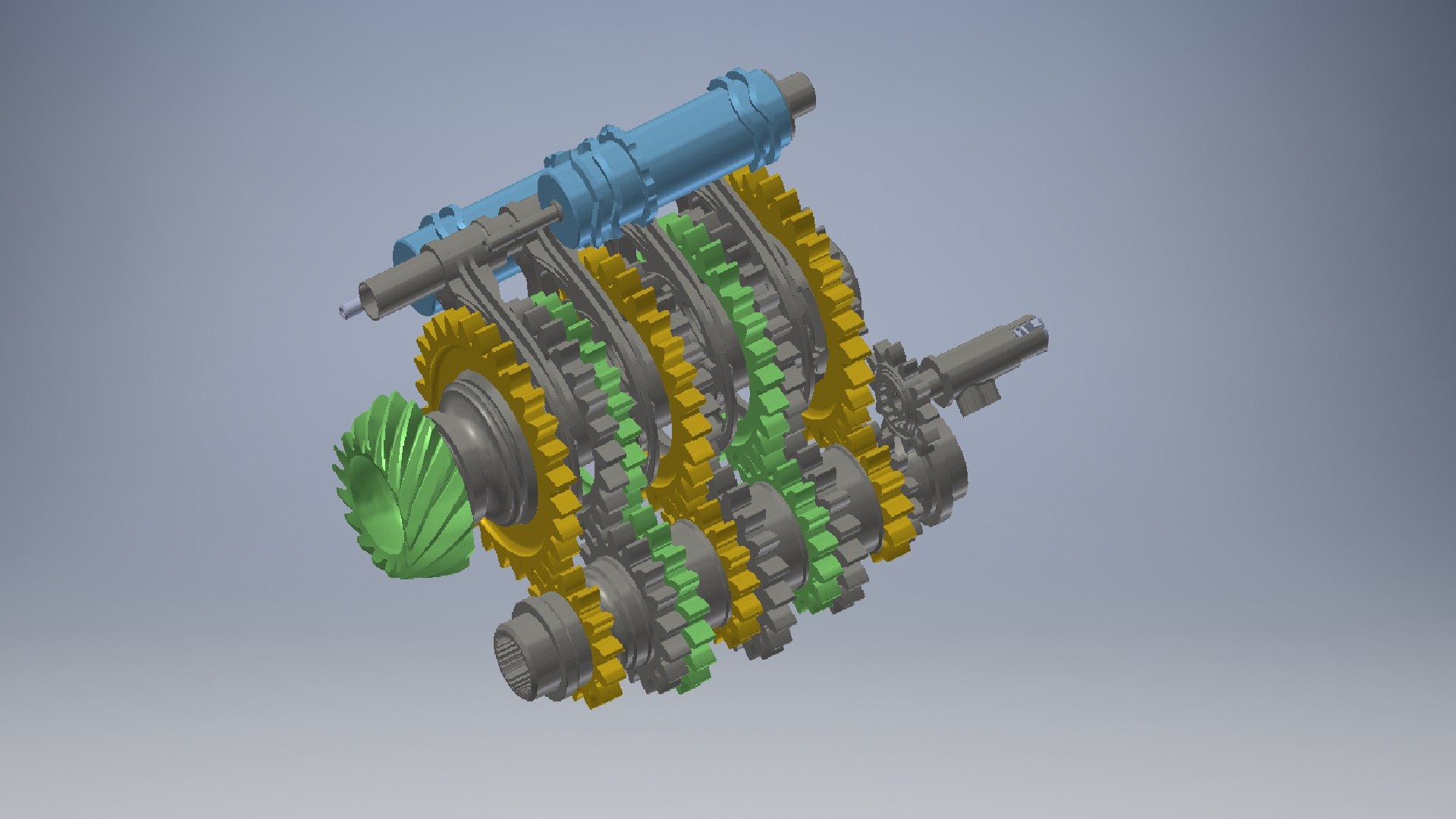
The ultimate, revolutionary breakthrough was the introduction of a dual-barrel system. In a modern seamless-shift gearbox, one highly complex selector barrel controls all the odd gears (first, third, fifth, and seventh), while a completely separate barrel controls all the even gears. Because these two barrels operate completely independently of one another, the gearbox can miraculously begin physically engaging the next gear before the current gear has fully released its grip.
This is where the mechanical reality becomes genuinely insane. For a microscopic, terrifying window of just two to four milliseconds, two different gears are physically engaged at the exact same time. This is a genuinely bizarre and contradictory mechanical situation. The input shaft, spinning furiously from the engine, is connected to the output shaft through two completely different gear ratios simultaneously. Fourth gear desperately wants the output shaft to spin at one specific speed, while fifth gear demands it spins at another, faster speed. Both are physically engaged, trying to do their exact job under immense torque. According to the basic laws of physics and mechanics, this impossible scenario should instantly lock the transmission solid, violently tearing the internal shafts and gears into metal shrapnel.
Yet, it doesn’t. It survives because of a breathtakingly simple yet brilliant piece of engineering genius: asymmetrical dog rings. The dogs—the tiny, crucial metal nodules on the rings that physically lock the gears into place—are shaped asymmetrically. One side of the nodule is cut at a steep, sheer angle, which forcefully pulls the dog towards the gear, securely engaging it under load. The opposite side of the nodule is gently sloped.
The magical sequence happens precisely like this: The moment fifth gear engages, it immediately starts driving the output shaft at a significantly higher speed. This sudden, massive burst of rotational speed forcefully throws fourth gear into a state of ‘back-drive’. When this happens, the sloped side of the fourth-gear dog physically pushes the dog ring away, instantly disengaging fourth gear perfectly. The overlap lasts just long enough—three tiny milliseconds—for the relentless flow of engine power to never, ever stop.
However, this system requires absolute, unwavering precision. If the computer timing is wrong by even a microscopic fraction of a single millisecond, the delicate dance fails, and the entire transmission violently rips itself apart. In the early, pioneering days of this technology, gearboxes were highly fragile and frequently destroyed. Today, however, Formula 1 engineers have thoroughly mastered this impossible dark art. A modern Formula 1 gearbox is so incredibly reliable that it can survive the brutal punishment of five thousand kilometres of racing, completing over three thousand shifts per race, lasting for ten consecutive Grands Prix without a single fault.
The bleeding hands, the destroyed engines, and the terrifying, one-handed cornering of the past are entirely gone. The monumental problem that took forty years, massive aerodynamic ambition, and three brilliant generations of engineers to solve is now just an invisible process that a modern Formula 1 car handles flawlessly in three impossible milliseconds. It is a true testament to the relentless, unending pursuit of perfection that defines the pinnacle of motorsport.








