The Misunderstood Masterclass: Why the Formula 1 World Was Completely Wrong About Liam Lawson’s 2026 Season
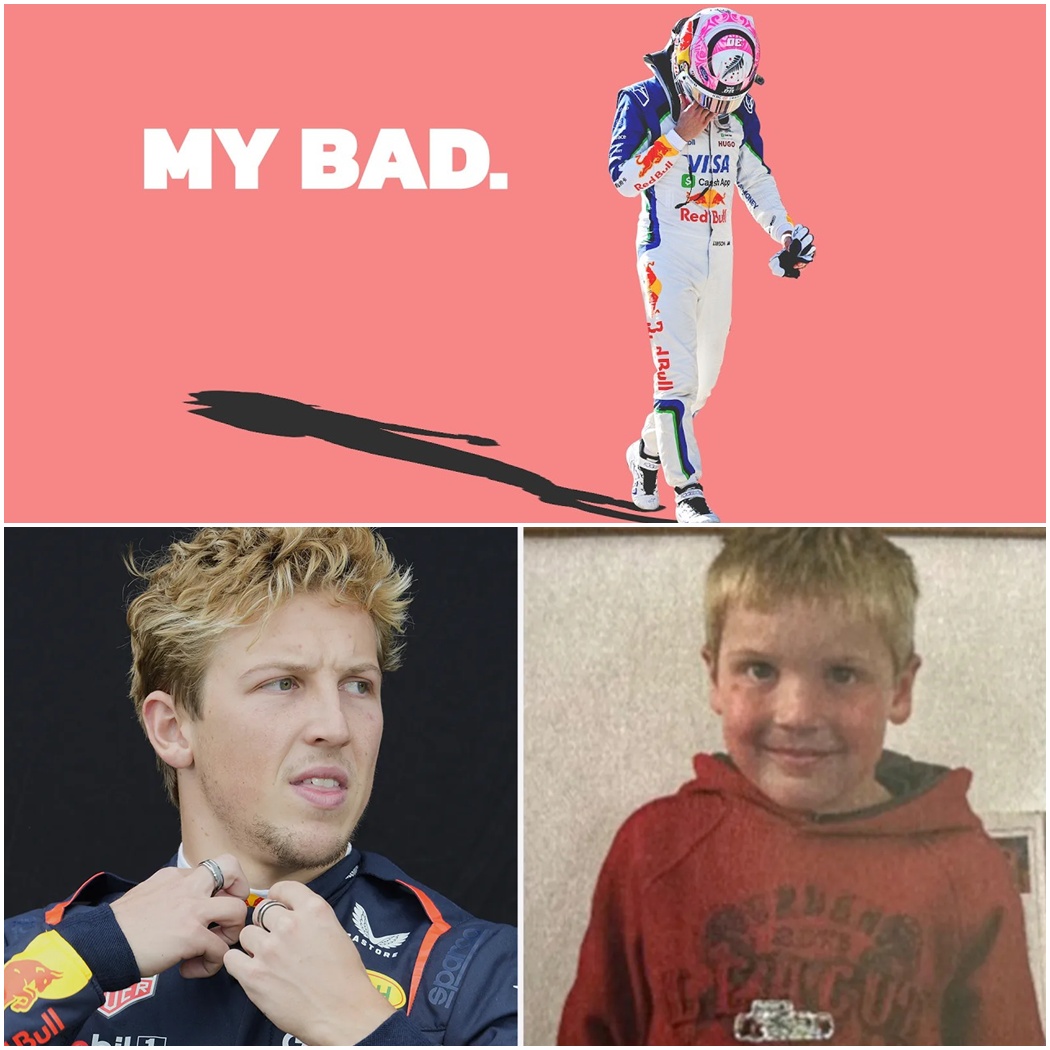
Opinions in the world of Formula 1 are absolutely everywhere. As fans, analysts, and passionate observers of the pinnacle of motorsport, we are constantly bombarded by partisan noise, explosive headlines, and sweeping narratives that dictate how we view the twenty drivers on the grid. Our ultimate goal should always be to cut through that noise and get as close to the empirical truth as humanly possible. However, at the end of the day, we are only human. We all have blind spots, and we all get things wrong from time to time. When it comes to Racing Bulls driver Liam Lawson and his 2026 Formula 1 campaign, a massive portion of the motorsport community—including seasoned commentators—needs to collectively hold their hands up and offer a sincere apology.
The prevailing narrative at the start of this year heavily centered around Lawson’s teammate, Arvid Lindblad. As the only true rookie on the 2026 grid, Lindblad entered the sport carrying a mountain of well-deserved hype. He holds the prestigious titles of being the youngest ever race winner in both Formula 3 and Formula 2. Naturally, the cameras and the public’s imagination gravitated toward him. When the season kicked off in Australia, a surface-level glance at the timesheets seemed to confirm the hype. Lindblad looked spectacular, clearing Lawson by over a second in Free Practice 1 and maintaining a solid advantage through the practice sessions.

During the Australian Grand Prix itself, Lindblad drove a remarkably mature race, scrapping at the front and keeping his cool to secure a stellar P8 finish. Meanwhile, Lawson bogged down severely at the race start, narrowly avoided a catastrophic collision with Franco Colapinto, and limped home to a disappointing P13. Looking at the raw average race pace, Lindblad clocked in at 1:25.14, a couple of tenths faster than Lawson’s 1:25.34. The media immediately handed the victory to the rookie.
But a deeper dive into the context reveals a completely different reality. Because Lawson dropped back dramatically at the start, his race was instantly compromised by dirty air and relentless traffic, forcing him into heavy scraps with the likes of Sergio Perez. Lindblad, on the other hand, enjoyed the luxury of clean air for massive stints of the race, easily punching in consistent lap times without aerodynamic disturbance. When you adjust for the traffic deficit, there was virtually nothing splitting the two Racing Bulls drivers on actual performance.
The narrative began to truly unravel during the Chinese Grand Prix. As a Sprint weekend, practice time was severely restricted. Lindblad suffered significant car issues, completing only six laps in FP1, while Lawson methodically banked 29 laps. Lawson capitalized on this preparation beautifully. In Sprint Qualifying, he decisively outpaced his highly-touted rookie teammate, clearing him by four-tenths in SQ1 and three-tenths in SQ2. During the Sprint race, Lindblad suffered a bizarre lap-one spin, while Lawson absolutely cooked his hard tires to perfection, holding on to a phenomenal P7 finish as the “best of the rest.”
Even when the margins tightened in standard qualifying, Lawson’s race craft shone through. He battled his way to P7 in the main Grand Prix, while Lindblad languished down in P12. The telemetry from China paints a fascinating picture: Lawson’s average lap time was 1:38.273, compared to Lindblad’s 1:38.457. That crucial gap was almost entirely forged in Sector 3—a section defined by a massive straight leading into the ultra-heavy braking zone of Turn 14. Lawson had the supreme confidence to attack the brakes on the limit, while the rookie visibly hesitated. There was absolutely no question: Lawson was the superior driver in China.
Yet, the ultimate misunderstanding occurred at the legendary Suzuka circuit in Japan. Many observers confidently proclaimed that Lindblad was the faster driver that weekend, but the underlying facts completely dismantle that theory. Lawson was consistently faster throughout practice and Q1. However, during Q2, Lawson suffered a critical front wing issue. Not only did this mechanical failure rob him of raw lap time, but replacing the wing completely destroyed the delicate aerodynamic balance of his car. Through no fault of his own, Lawson dropped nearly four-tenths to Lindblad.

In the Japanese Grand Prix, the safety car timing wildly favored Lawson following an Ollie Bearman crash, leaving Lindblad—who had just pitted—at a severe disadvantage. Critics used this luck to downplay Lawson’s performance, but the average best sectors tell the real story. Lawson averaged a 1:35.611 against Lindblad’s 1:35.831. A massive chunk of that advantage was extracted in Sector 1, the terrifying, high-speed “S” curves that demand absolute driver perfection and unshakeable confidence. Lawson, who has historically been a demon around Suzuka since his Super Formula days, dominated the rookie where it mattered most.
So, why has the Formula 1 world been so eager to overlook Liam Lawson’s brilliance? The answer lies in a toxic mixture of career instability and a polarizing public reputation. Lawson has fallen into the “uncanny valley” of F1 prospects. He is not a fresh, shiny rookie anymore, but he also lacks the mileage of a seasoned veteran. His career path has been agonizingly staggered: a handful of incredibly impressive cameo appearances in 2023, a few races in 2024, and extended periods sitting helplessly on the sidelines. This lack of continuous seat time ruthlessly killed the immense hype he generated when he famously passed Max Verstappen on track at Zandvoort and knocked the reigning champion out of Q2 in Singapore.
Furthermore, Lawson is unapologetically aggressive. He races with his elbows firmly out, a trait that has led to highly publicized clashes with massive names like Fernando Alonso and Sergio Perez. In 2024, Alonso angrily accused Lawson of screwing his qualifying, resulting in a fierce on-track battle during the Miami sprint. Similarly, Lawson’s lingering feud with Perez—complete with middle fingers and brutal radio messages—has made him a villain to some fanbases. When you anger two of the most deeply supported drivers on the global grid, the resulting backlash is fierce, often blinding fans to the actual quality of your driving. We romanticize the aggressive, uncompromising styles of Ayrton Senna and Max Verstappen, but for a midfield driver fighting for his career, that same aggression is heavily criticized.
Compounding all of this is the sheer unpredictability of the 2026 Formula 1 machinery. The current grid is plagued by erratic battery deployments and massive turbo lags, making it incredibly difficult to distinguish driver errors from hardware ineptitude. When a driver bogs down on the starting line, as several champions have done this year, it is nearly impossible for the outside world to know if the driver slipped up, or if the car simply failed to deliver power.
Liam Lawson is driving for his absolute life in 2026. With talents looming in Formula 2 and the pressure mounting within the Red Bull family, he desperately needs to put himself in the shop window for a permanent, secure future in this sport. The reality that the data so clearly proves is that he is doing exactly that. He is consistently performing alongside the likes of Pierre Gasly and Ollie Bearman at the absolute pinnacle of the midfield. It is time for the Formula 1 community to look past the rookie hype, set aside the biases regarding his on-track clashes, and acknowledge the truth. Liam Lawson is having a spectacular season, and we were entirely wrong to doubt him.