The Macarena Revolution: Ferrari’s Audacious High-Speed Gamble to Topple Mercedes in Shanghai

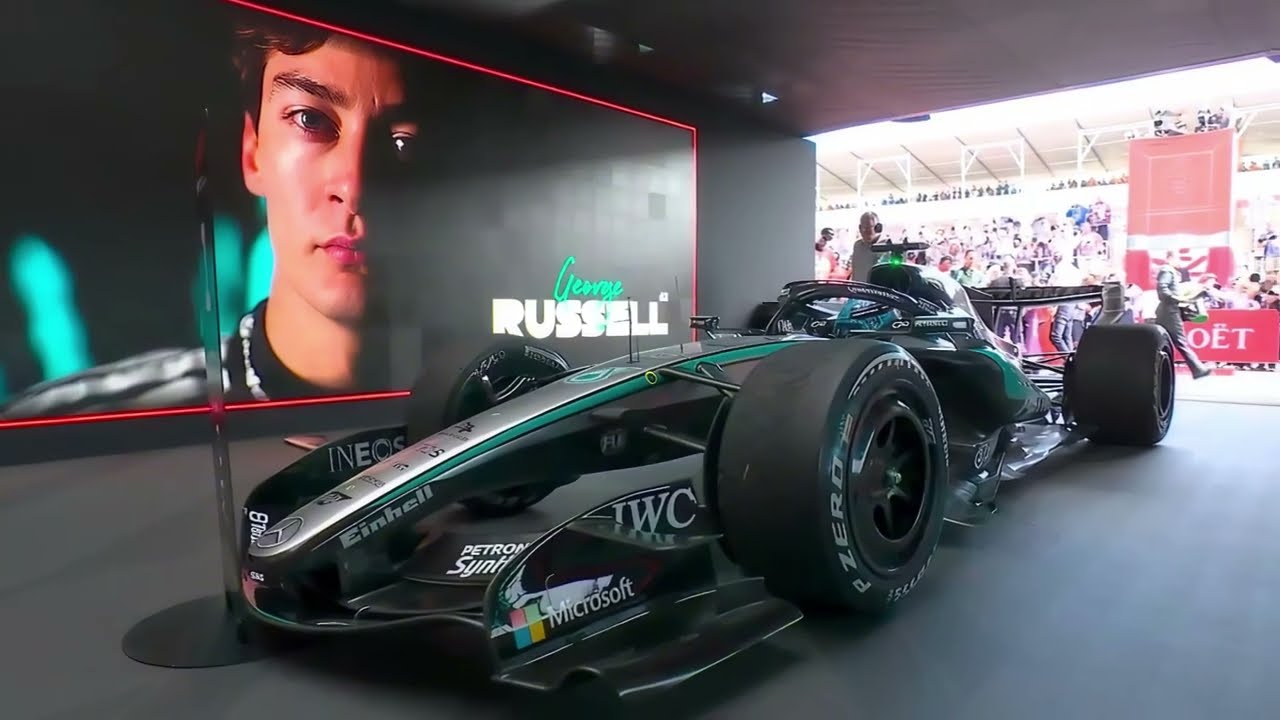
The 2026 Formula 1 season was always promised to be a turning point for the sport, a clean slate where the hierarchy of the grid would be torn up and rewritten. But as the dust settled on the season opener in Australia, the narrative felt eerily familiar. Mercedes, led by the formidable duo of George Russell and the young sensation Kimi Antonelli, had seized the early initiative. They didn’t just win; they dominated, showcasing a power unit advantage that left the rest of the field searching for answers. For Ferrari, finishing third and fourth was respectable, but in the hallowed halls of Maranello, respectability is not the goal. Glory is.
Just days after the Australian Grand Prix, Scuderia Ferrari has sent a clear message to the paddock: they are not waiting for the “long game.” While many expected a slow, methodical development path for the new regulations, Ferrari Team Principal Fred Vasseur has hit the accelerator. As the team arrives in Shanghai for the Chinese Grand Prix, they carry with them an aerodynamic innovation so radical it has been dubbed the “Macarena” wing. It is a move born of necessity, urgency, and a refusal to accept second best.

At the heart of this technical firestorm is the new 2026 regulatory framework, which mandates active aerodynamics. Every car on the grid features front and rear wing flaps that open on the straights to reduce drag and close in corners to generate the downforce required for high-speed stability. However, Ferrari’s engineers found a gap in the rulebook that everyone else seemingly overlooked. While the regulations dictate how the wing flaps must behave, they are surprisingly silent on the orientation of the main plane of the wing itself.
Ferrari’s interpretation is nothing short of breathtaking. Instead of merely opening a flap, the “Macarena” system rotates the entire rear wing structure around its own axis until it is effectively running upside down on the straights. This isn’t just about reducing drag; it’s about a fundamental shift in physics. By flipping the wing, Ferrari is momentarily generating aerodynamic lift rather than downforce. This massive reduction in resistance, combined with a stronger diffuser stall effect, promises a top-speed gain of 5 to 8 kilometers per hour. On the punishing 1.2-kilometer back straight in Shanghai, that kind of advantage is the difference between a desperate defense and an easy overtake.
The nickname, coined by Vasseur himself, refers to the rhythmic, hand-flipping gestures of the famous 1990s dance. But while the name might bring a smile to the face of fans, the implications are deadly serious. This wing was actually ready for the season opener, having been tested briefly on Lewis Hamilton’s car during the Bahrain sessions in February. However, the complexity of the system—the mechanical weight, the precision required for thousands of activations, and the need for FIA approval—meant Ferrari held it back. After Melbourne, that caution has vanished. The data showed that while the SF26 is a match for Mercedes in the corners, it is being eaten alive on the straights. The “Macarena” is the equalizer.
But the wing is only one half of the story. Beneath the carbon fiber skin of the SF26 lies a power unit project that is equally radical. Codenamed Project 678, Ferrari’s 2026 engine is a departure from decades of engineering tradition. While every other manufacturer continues to use aluminum for cylinder heads, Ferrari has gambled on steel alloys. Steel allows for much higher combustion chamber pressures and temperatures, theoretically leading to a more efficient and powerful engine.
The path has not been easy. The added weight of steel and the departure of key engine personnel led to a difficult development phase marked by reliability scares. Yet, in Australia, the engine held firm. It was reliable, fast off the line, and showed exceptional integration with the car’s chassis, resulting in the best tire degradation in the field. Now, reports from Italy suggest that Ferrari is already working on a full architectural redesign of this engine, targeting a debut at Monza or even as a spearhead for the 2027 campaign.
The timing of this aggressive development is no coincidence. In the political theater of Formula 1, timing is everything. Currently, Mercedes is believed to be benefiting from a specific interpretation of compression ratio testing—a loophole that the FIA is scheduled to close this June. By pushing their engine redesign and the “Macarena” wing now, Ferrari is positioning itself to strike just as Mercedes’ current advantage is forced to contract.
For the drivers, this urgency is a breath of fresh air. Lewis Hamilton didn’t join Ferrari to help build a project for the 2030s; he joined to win his eighth world title now. Charles Leclerc, the prince of Maranello, has waited years for a car that matches his prodigious talent. They are currently the most experienced and formidable driver pairing on the grid, and they are demanding a car that can fight on every inch of the asphalt. Fred Vasseur’s leadership has been defined by a “fast-track” mentality, a stark contrast to the bureaucratic slowing that often plagued Ferrari in the past.
The decision to bring the “Macarena” wing to a sprint weekend in China—a format that offers only one hour of practice before qualifying—is the ultimate sign of this new era. It is a high-risk, high-reward strategy. If the wing’s complex actuation fails or the balance of the car is upset, Ferrari could find themselves struggling in the midfield. But if it works, they could leapfrog Mercedes and turn the 2026 season into a genuine two-horse race before the European leg even begins.
The paddock is watching Shanghai with bated breath. The FIA has already had extended discussions with Ferrari to ensure the rotating structure complies with the spirit of the rules. For now, the “Macarena” is legal, but in the fast-paced world of F1 politics, that status can change with a single protest. Ferrari is prepared for that fight. They are prepared for the weight penalties, the mechanical risks, and the technical scrutiny.
The 2026 Chinese Grand Prix is more than just a race; it is a declaration of intent. Ferrari has moved past the era of excuses and “next year” promises. By introducing a wing that defies conventional logic and an engine that challenges material science, they are proving that the Scuderia is once again the center of innovation in Formula 1. Whether Hamilton and Leclerc can convert this technical audacity into a podium-topping performance remains to be seen, but one thing is certain: Ferrari is no longer following the leader. They are carving their own path, 8 kilometers per hour faster than anyone expected.
As the lights go out in Shanghai, all eyes will be on the rear of the scarlet cars. When that wing flips and the SF26 screams down the long straight, it won’t just be an aerodynamic maneuver. It will be the sound of a giant waking up, ready to reclaim its throne and remind the world why Ferrari is the greatest name in racing.