The 15-Second Wake-Up Call: How Suzuka Exposed McLaren’s Ultimate Nightmare Against an Unstoppable Mercedes
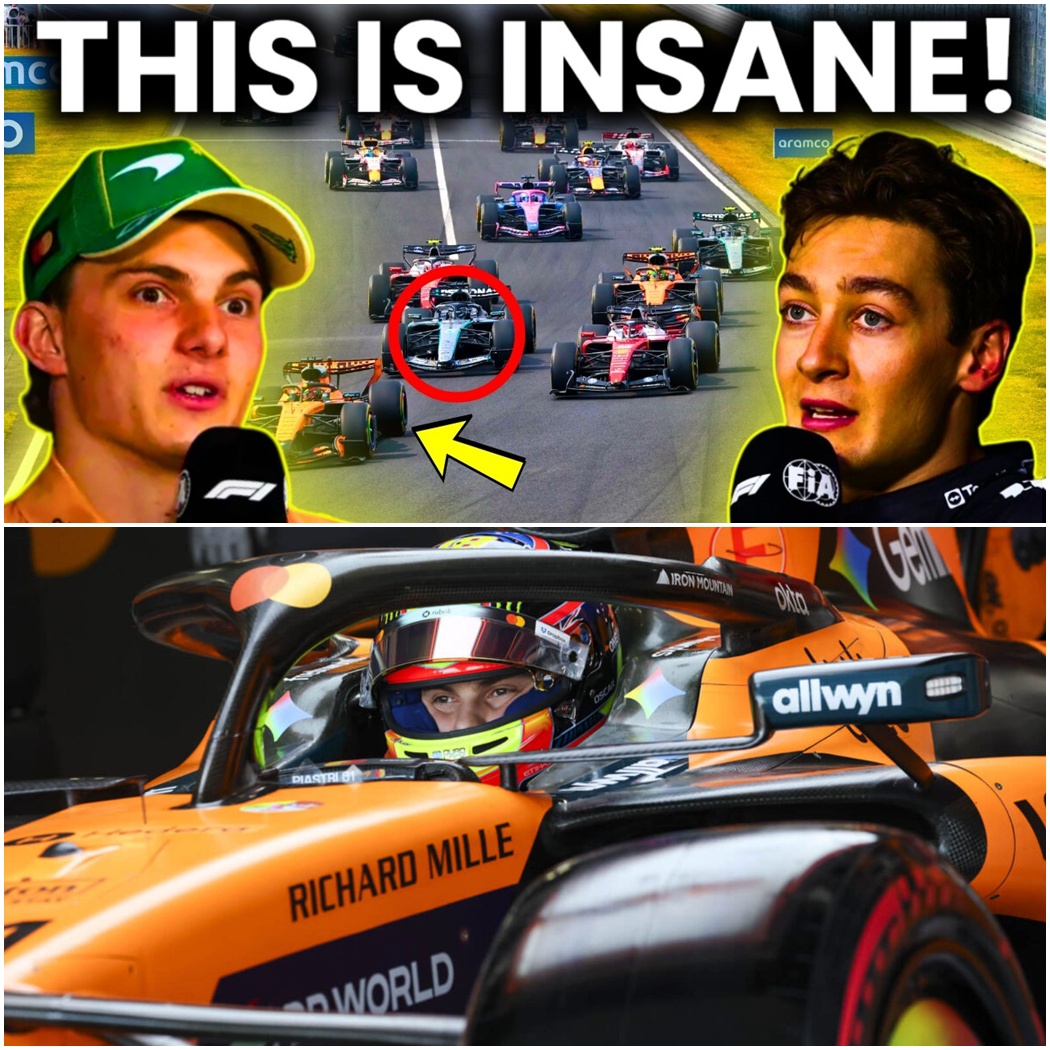
The Japanese Grand Prix at Suzuka was supposed to be a thrilling battle of tactical wits and precision driving. Instead, it turned into a harsh, undeniable reality check for the entire Formula 1 paddock. Suzuka didn’t just expose a lost victory for McLaren’s Oscar Piastri; it laid bare the terrifying scale of the fundamental problem facing every team not wearing silver. What started as a masterclass in defensive driving and strategic hope rapidly devolved into a stark demonstration of raw, unadulterated dominance by Mercedes. The illusion of a closely fought 2026 championship may have just been shattered, leaving McLaren and the rest of the grid scrambling for answers in the wake of a 15-second deficit.
For the first half of the race, the narrative was intoxicating. Oscar Piastri didn’t just inherit his track position; he earned it with a brilliant launch off the starting line. He out-executed both Mercedes drivers in the crucial opening moments and immediately set about dictating the pace of the race. With remarkable maturity and car control, Piastri held back the relentless pressure of George Russell. For a fleeting period, it genuinely looked as though McLaren had discovered the magic formula to neutralize the inherent aerodynamic advantage of the Mercedes machinery. It appeared that sheer racecraft, brilliant tire management, and defensive precision could cancel out pure straight-line speed.

But beneath that hopeful surface, a much darker reality was quietly unfolding. While Piastri was driving the wheels off his McLaren to maintain the lead, the underlying metrics of tire degradation, energy deployment, and aerodynamic efficiency were all heavily leaning in Mercedes’ favor. The tension was palpable, and Piastri himself likely knew that he was walking a tightrope without a safety net.
Then came the turning point that reshaped the entire afternoon—and potentially the entire season. A safety car, triggered by Oliver Bearman, completely reset the field. On paper, a safety car often breeds chaos and opportunity. In reality, at Suzuka, it simply acted as a magnifying glass, exposing the brutal truth of the current competitive order.
When the race restarted, Kimi Antonelli—the sensational rookie who has taken the sport by storm—found himself with track position and, most importantly, clean air. What happened next wasn’t a battle; it was a disappearance act. Antonelli began pulling away at a completely staggering rate, unleashing a level of pace that McLaren simply could not comprehend, let alone respond to. By the time the checkered flag waved, Antonelli was a massive 15 seconds down the road.
In the modern era of Formula 1, where gaps are usually measured in tenths or hundredths of a second, a 15-second margin is an absolute eternity. It is the kind of gap that keeps team principals awake at night. Crucially, this massive deficit wasn’t built on a lucky pit stop, a chaotic weather change, or a strategic blunder by McLaren. It was built purely on relentless, untouchable pace.
Perhaps the most chilling aspect of the entire weekend was Oscar Piastri’s post-race demeanor. There was no visible anger, no finger-pointing at the pit wall, and no attempts to blame the timing of the safety car. Instead, there was just cold, measured clarity. Piastri openly and honestly admitted that McLaren had executed virtually a perfect weekend. They got the setup right, the start was flawless, the strategy was sound, and the driving was impeccable. Yet, they still ended up nowhere near close enough to challenge for the win.
When a driver of Piastri’s caliber admits that a flawless execution still results in a “pretty big gap to fill,” it changes the entire complexion of the championship. In Formula 1, when flawless execution is no longer the limiting factor, you have hit a performance ceiling. The battle shifts immediately from the racetrack to the factory floor. It is no longer a fight of racecraft; it is an all-out engineering war.
Piastri briefly referenced McLaren’s miraculous mid-season turnaround from the previous year—a surge that transformed them from midfield stragglers to front-running contenders. But his tone at Suzuka lacked the fiery optimism of the past. It was a measured acknowledgment of the mountain they now have to climb. McLaren knows exactly what it takes to develop a car mid-season, but they also know how exponentially harder that task becomes when your main rival is starting from a position of profound superiority, rather than from behind.
Adding another layer of dread for the rest of the grid is the “Antonelli Factor.” This wasn’t just a fast car driving itself to victory; this was a rookie stepping into the immense pressure of leading a Grand Prix and controlling it with the icy veins of a seasoned veteran. Antonelli’s pace in clean air was described by analysts as completely untouchable. This raises a terrifying question that is currently echoing through the paddock: Is this purely a mechanical advantage, or is Antonelli already maximizing the car in a way that others cannot?
If Antonelli is already extracting more performance from the Mercedes than the data suggested was possible, then the team isn’t just leading the pack—they are evolving in real-time. This means McLaren isn’t chasing a stationary target; they are chasing a rocket ship that is still accelerating. Furthermore, if Antonelli can consistently match or beat a proven race winner like George Russell, Mercedes suddenly possesses a dual-threat lineup capable of applying suffocating strategic pressure on every other team.
The pressure inside McLaren right now is immense. It is a race against the calendar as much as it is against Mercedes. Under the current strict financial regulations and cost caps, aggressive development is fraught with danger. A single misstep in wind tunnel correlation or a failed upgrade package could permanently lock in this 15-second deficit for the remainder of the year. Mercedes, meanwhile, will not be standing still. The pressure is on McLaren not just to build speed, but to build it significantly faster than a team that already has a massive head start.
What makes Mercedes’ advantage so incredibly dangerous is that it doesn’t appear fragile. Sometimes, a car is only fast on a specific type of circuit or in specific weather conditions. But the Mercedes looks utterly complete. It has strong raw pace, gentle tire degradation, and it operates flawlessly in clean air. When dominance is this repeatable, it becomes a structural nightmare for the rest of the sport.
This is exactly where the battle often shifts from the asphalt to the political backrooms of the paddock. When teams realize they cannot catch a rival purely on engineering merit, the lobbying begins. Whispers about the legality of certain components, questions regarding the spirit of the regulations, and quiet pressure on the governing body become the new weapons of choice. If Mercedes continues to vanish up the road by 15 seconds every Sunday, expect the political warfare behind the scenes to reach a boiling point.
Suzuka was not just a race; it was a loud, unignorable warning siren. Oscar Piastri and McLaren have realized that perfection is no longer enough. The 2026 title fight is far from officially decided, but the balance of power has violently shifted. Whether this is the dawn of an unstoppable new Mercedes dynasty or the catalyst for the greatest comeback story in McLaren’s history remains to be seen. But one thing is absolutely certain: the clock is ticking, and 15 seconds is a very, very long time.








