The Death of Instinct: Are Formula 1 Drivers Being Reduced to Human Robots?
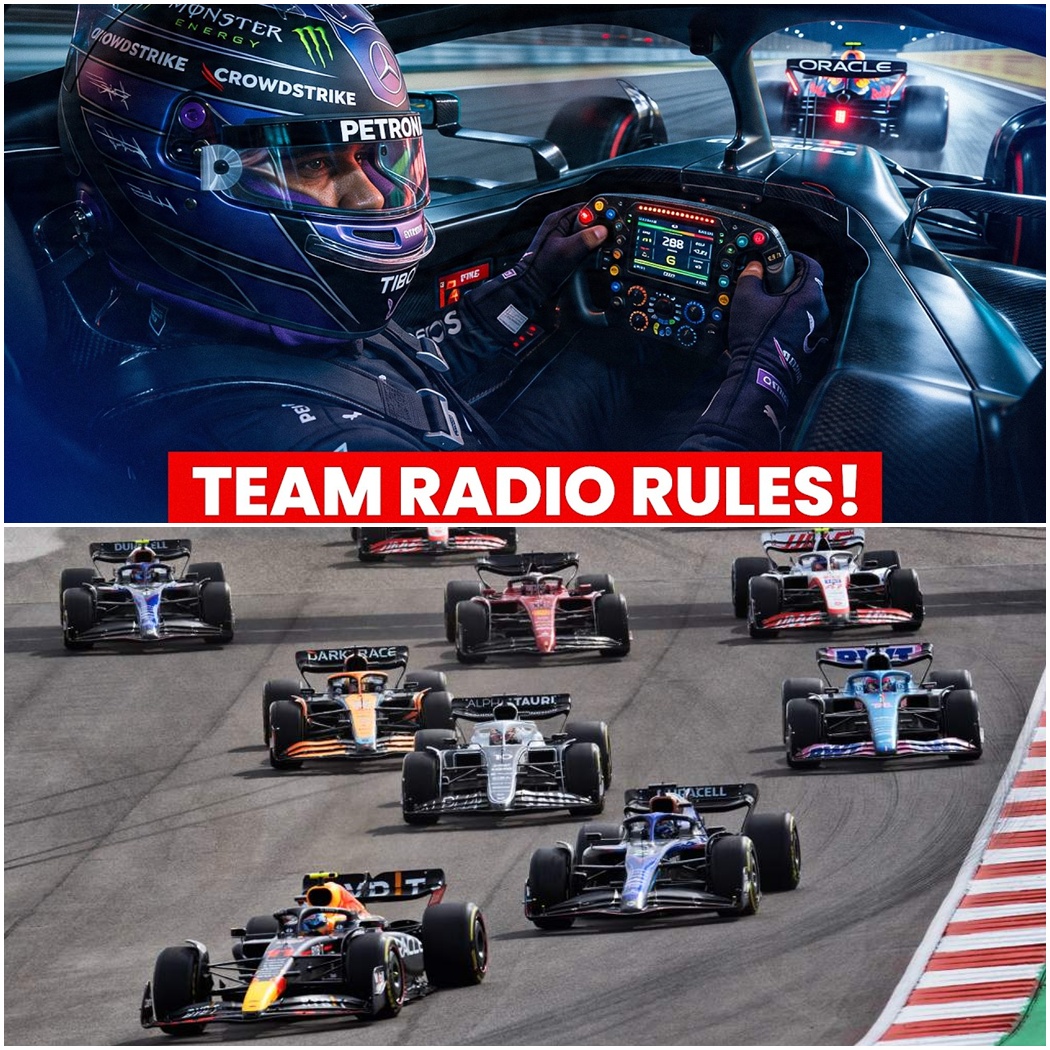
Silverstone 2022, Lap 49. Carlos Sainz is fiercely leading the British Grand Prix, his first-ever Formula 1 victory lingering tantalizingly within reach. His tires are holding up, his pace is undeniably real, and his dream is agonizingly close. And then, his radio crackles to life. The Ferrari pit wall delivers a cold, calculated instruction: they want him to yield. They want him to move aside for his teammate, Charles Leclerc, who is trailing behind him on track. Sainz is effectively being asked to hand over a race he has earned in real time, while the battle is still raging. Sainz bluntly refuses. He keeps the door firmly closed, holds his racing line, and goes on to win the Grand Prix. In the post-race debrief, when pressed about that defiant moment, Sainz doubled down. He stated he would do it all over again—that the primal instinct to race, the very instinct every driver cultivates from the moment they first grip a steering wheel in a go-kart, told him to hold on.

That electrifying moment at Silverstone should have been universally celebrated as a magnificent triumph of pure driver instinct over sterile system control. In some corners of the motorsport world, it was. However, it also peeled back the curtain on an uncomfortable reality that Formula 1 rarely acknowledges out loud. For every Carlos Sainz who bravely holds his ground, there are dozens of unseen moments where the driver simply obeys. Where the radio wins, and human instinct loses. Modern Formula 1 drivers don’t just race anymore; they follow strict instructions. The defining question that sits beneath every team order, every mandated delta time, and every “save your tires” command is this: At what exact point did Formula 1 drivers stop deciding how to race, and start being entirely managed through it?
Motorsport has always been steeped in politics. It has always involved complex team dynamics and ruthless strategic calculation. Anyone who witnessed Ayrton Senna and Alain Prost famously share a McLaren garage in 1988 and 1989 understands that the relationship between a driver and their team is never simple. But there was something fundamentally different about that golden era of racing. The conflict was raw, unfiltered, and deeply human. Decisions were made at breakneck speeds, in the heat of the moment, exclusively by the courageous people sitting inside the cockpits. When Senna audaciously went around the outside of Prost at Eau Rouge in 1988, there wasn’t an engineer on the pit wall telling him to execute that maneuver. When he controversially held his line at Suzuka in 1990, that massive decision was made inside a helmet, not inside a headset. Fans revere those iconic moments because they felt authentic—dangerous, sometimes reckless, occasionally wrong, but unequivocally human. The driver was the primary variable, and that glorious unpredictability was the emotional engine driving the sport.
Today, there is a fierce and growing debate about whether modern Formula 1 can still produce rivalries with that same profound emotional weight. Some purists argue that the sport is technically more competitive than ever, with microscopic margins and extraordinary engineering. Others, however, feel that something vital has been aggressively filtered out. They argue that the monumental moments that define careers and championships now occur in sterile strategy meetings and dark simulation rooms, rather than out on the sun-baked asphalt.
This profound shift did not happen overnight. It was a gradual erosion driven by forces that, individually, made logical sense. Telemetry became terrifyingly sophisticated. Tire compounds evolved into highly complex, fragile elements. The unforgiving gap between optimal performance and catastrophic tire failure became narrower and vastly more consequential. To cope, teams built massive strategy departments. Engineers developed real-time modeling tools capable of calculating the exact cost of every on-track decision in mere fractions of a second. Each of these technological leaps made the cars undeniably faster, but each leap also stripped a small piece of autonomy away from the driver.
By the mid-2010s, the team radio had mutated from a tool of basic communication into an instrument of absolute control. Drivers began receiving relentless, lap-by-lap instructions regarding tire temperature windows, precise delta times to the car ahead, complex fuel-saving modes, minute brake bias adjustments, and highly calculated overtaking windows. The driver’s job was increasingly reduced to merely executing a meticulously crafted plan that had been finalized long before the starting lights ever went out. The driver became less of a gladiator and more of an organic processor, adapting to a revised script fed to them by engineers watching data streams in the garage.
To be fair, this incredible technology has made modern drivers faster, safer, and more precise than any generation before them. But this hyper-optimization is precisely where it stops being “racing” in the way most fans passionately understand the word. Modern Pirelli tires operate within absurdly narrow performance windows. The difference between a tire gripping the track and a tire degrading into uselessness can be a matter of two or three degrees of surface temperature. Pushing slightly too hard through a sequence of corners overheats the rubber, causing lap times to collapse. Because managing a tire at that extreme level of precision while simultaneously racing wheel-to-wheel at 200 mph borders on the limit of human capability, engineers stepped in. They began actively coaching drivers through tire management in real time—dictating which specific corners to ease off, which braking zones to soften, and which sectors to deliberately sacrifice.

This relentless micro-management poses a deep philosophical question about the very identity of Formula 1. If F1 is primarily a constructor’s championship—an arms race between brilliant engineering organizations to build the fastest machine—then treating the driver as just another component to be optimized makes complete logical sense. But if Formula 1 is truly a driver’s sport, where the core appeal is watching the best racers in the world express their raw talent and courage under immense pressure, then the current model is suffocating. The moments that immortalize great drivers are born of spontaneous instinct and split-second improvisation. The sport cannot be both perfectly engineered and beautifully unpredictable.
Furthermore, this extreme optimization breeds inevitability. F1 cars are now remarkably reliable; engine blowouts and mechanical failures are increasingly rare. When cars do not fail, and when pre-calculated strategies are executed to perfection, races rarely change unexpectedly. The glorious, mechanical chaos and driver errors born from pushing beyond the absolute limit have been largely engineered completely out of the sport. F1 has become painfully predictable, and absolute certainty is the sworn enemy of a great spectacle.
Perhaps the most terrifying layer to this reality is the extensive use of simulators. Modern drivers spend countless hours not just testing setups, but actively rehearsing races. They run through endless strategic scenarios and drill tire management sequences until the team’s desired response becomes muscle memory. This means that the “instinctive” response a driver reaches for under pressure on a Sunday has increasingly been pre-programmed on a Tuesday. The improvisation we think we are watching is not entirely improvised. Control has covertly shifted away from the cockpit and into the server room.
When Charles Leclerc openly vents his frustrations on the Ferrari radio, or when Lando Norris argues with the McLaren pit wall about yielding a hard-fought lead, we are witnessing the painful collision between a born racer’s instinct and an engineer’s spreadsheet. Modern Formula 1 heavily rewards cold execution over fiery instinct. The fastest, bravest drivers in the world are constantly being told exactly how to drive. The lingering, unresolved question is whether the raw, unpredictable version of Formula 1 that the world originally fell in love with can actually survive inside a system mathematically designed to eliminate those very qualities.








