Was Queen Mary a Kleptomaniac? The Truth Is More Interesting SS
Here’s a question that sounds simple but isn’t. Can you steal something that’s freely given to you? Because that’s the accusation against Queen Mary, wife of George V, grandmother of Elizabeth II, and one of the most formidable women to ever occupy a British throne. The story goes like this.
Mary visited country houses across England, admired whatever caught her eye, and walked out with it. Silver, porcelain, fabraier, jade. If it was beautiful and it was yours, it wasn’t yours for long. The word people reach for is kleptomaniac. It’s catchy, it’s dramatic, and it’s wrong, but not in the way you’d think.
See, kleptomania is a clinical diagnosis. It describes a compulsive, uncontrollable urge to steal objects you don’t need and often don’t even want, followed by shame and distress. It’s an impulse control disorder classified alongside pyromania and compulsive gambling. The person can’t help themselves. That’s the whole point.
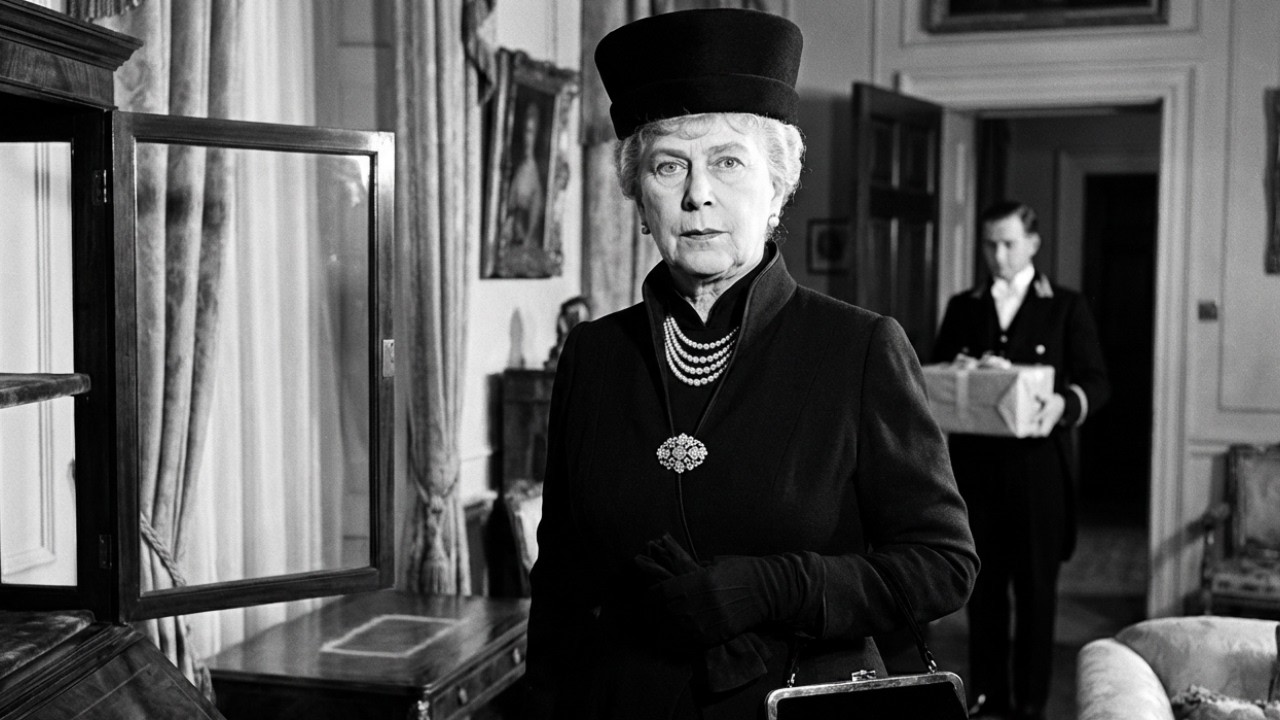
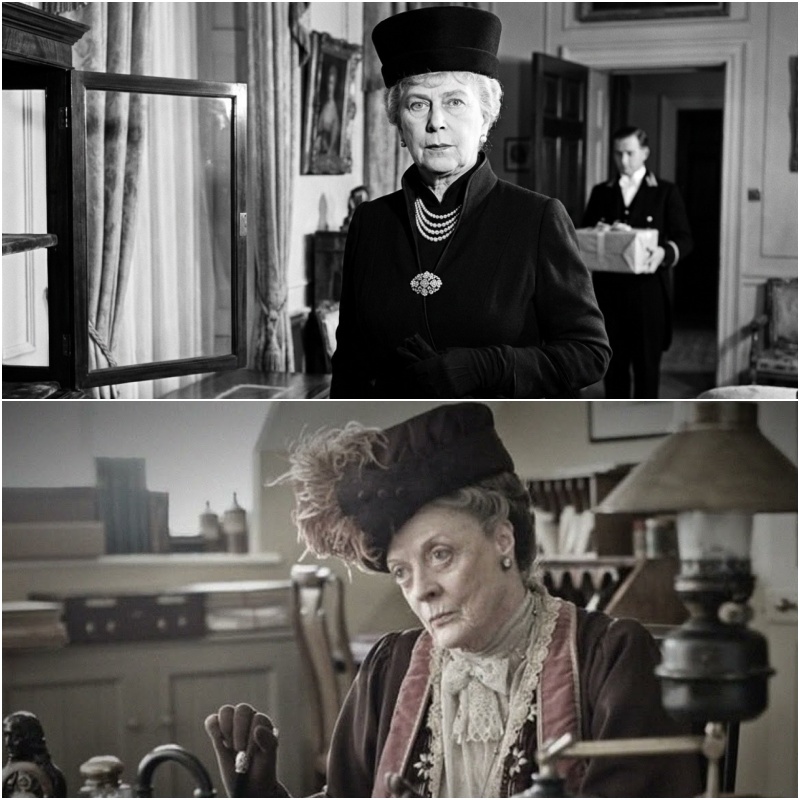
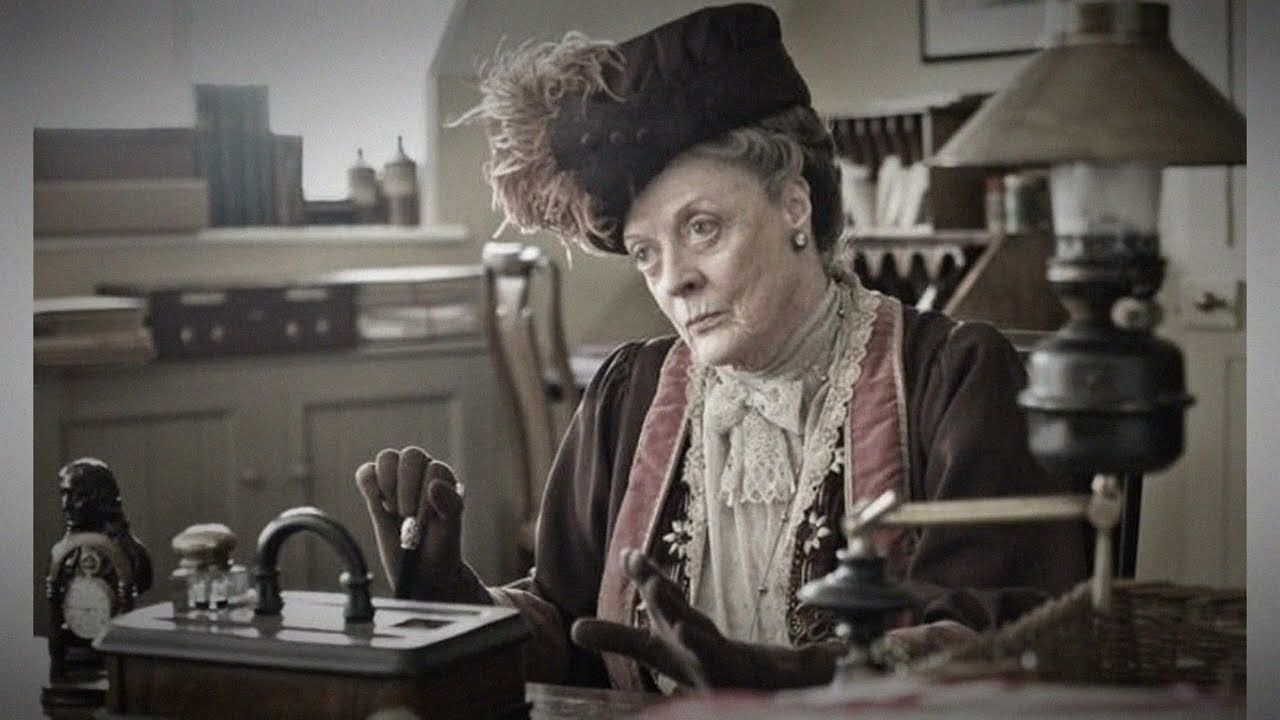
What Mary did was the opposite of compulsive. It was precise, methodical, and it exploited a loophole in the social architecture of monarchy so elegant that calling it theft almost feels like an insult to the craftsmanship. If you’ve watched Downtown Abbey, you’ve already seen a version of this. Julian Fellows dramatized the royal visit.
The panic, the hiding of valuables, the dread of a queen’s wandering gaze settling on something you loved. Millions of viewers watched that scene and thought it was clever fiction. It wasn’t. fellows grew up in exactly the kind of aristocratic circles where these stories were traded like currency passed down through families who’d learned the hard way what it meant to host Queen Mary for the weekend.
The Downtown version gave you the punchline. The comic scrambled to hide the silver, the terrified glances exchanged between husband and wife. It didn’t give you the mechanism. And the mechanism is where this gets genuinely fascinating. To understand what Mary was doing, you have to understand who she was before she was queen.
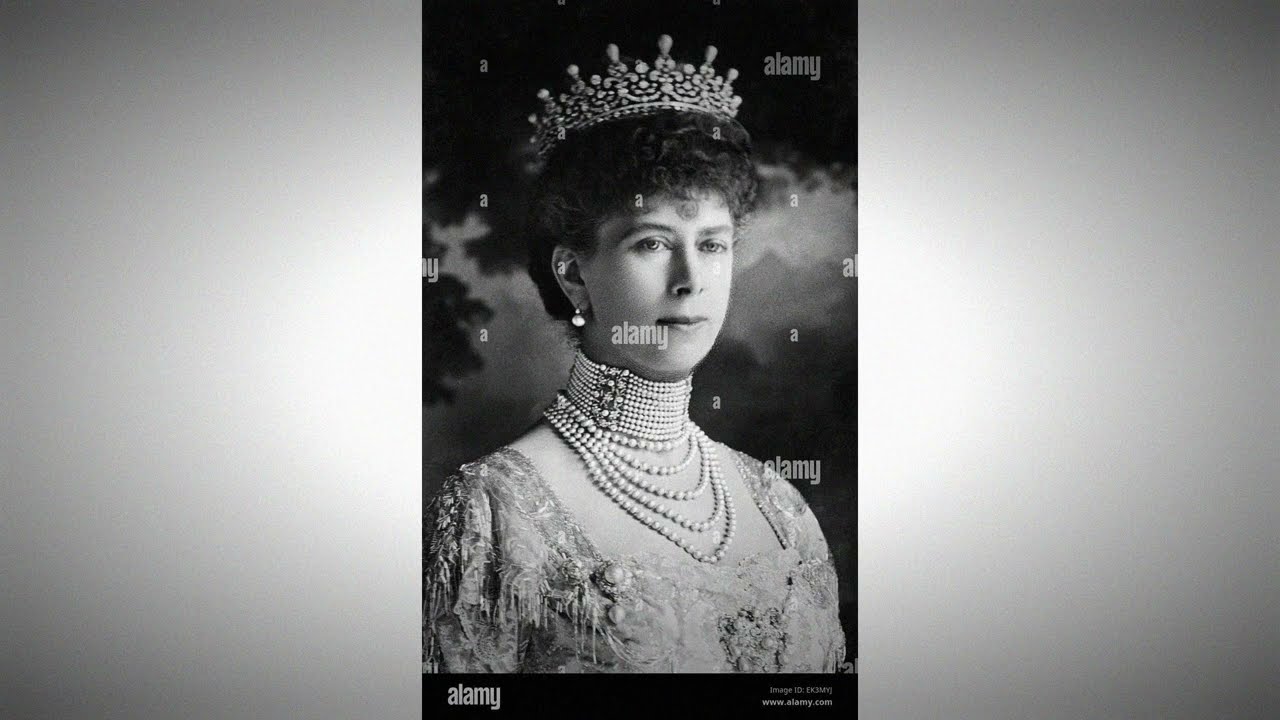
And who she was before matters enormously because it explains everything that came after. Victoria Mary Augusta Louise Olga Pauline Claudine of Tech was born on the 26th of May 1867 at Kensington Palace. Sounds privileged. It wasn’t. Not even close. Her father, Francis, Duke of Tech, carried a title that concealed the genealogical wound.
He was the product of a morganatic marriage in the House of Verenberg, meaning his mother had married beneath the required royal rank, and that stain followed his bloodline through every court in Europe. He was too royal for ordinary society and too compromised for the first tier of princes. a man permanently lodged in the gap between what he was and what he was supposed to be.
Her mother, Princess Mary Adelaide of Cambridge, was a granddaughter of King George III and therefore unimpeachably royal by blood. She was also, by every surviving account, a financial catastrophe in human form. Mary Adelaide lived on a parliamentary grant of roughly £5,000 a year, comfortable for a minor princess, nowhere near sufficient for the scale of entertaining and personal expenditure she considered essential to her dignity.
She gave lavishly. She entertained constantly. She treated money as an abstraction that would sort itself out eventually, and it never did. By the early 1880s, the Tech family had accumulated debts of nearly £18,000, roughly2 million pounds in today’s money, and their creditors weren’t feeling patient about it anymore.
Relatives stepped in. The kind of intervention that looks like a suggestion, but works like a command. In 1883, the family was relocated to Florence. The official reason was cultural enrichment. The real reason was that living on the continent was cheaper than living in London, and distance from creditors bought time that the texts desperately needed.
Young May, that’s what the family called her, was 16 when they arrived in Florence, old enough to understand exactly what was happening and why. She spent roughly 2 years there, absorbing two educations simultaneously. The first was in beauty. The churches, the euphitzi, the pity palace, the renaissance architecture and its contents, the accumulated material culture of centuries of Florentine wealth displayed on every street and in every piaza.
She walked through rooms where single paintings were worth more than her family’s annual income, where furniture had been commissioned by Medici and maintained by dynasties that understood the relationship between objects and power with a clarity that bordered on religion. The second education was in its absence.
The daily reality of being royal and broke. The tight-lipped negotiations with landlords. The letters from London carrying news of creditors growing less polite. The careful social choreography of maintaining appearances when everyone in the expatriate community knew or suspected the real reason the texts were living abroad. May watched her mother navigate this gap between station and solvency with charm, force of personality, and an absolute refusal to acknowledge any contradiction between what she was and what she could afford. The charm worked mostly, but May
was watching, and what she learned was this. Beautiful objects signify power. Money is unreliable and social authority, if you wield it with enough confidence, can substitute for both. That lesson burrowed deep, it would stay there for 70 years. The family returned to England in 1885, and May entered the marriage market of European royalty, carrying significant disadvantages.
The texts weren’t wealthy. The morganatic stain limited her options. But Queen Victoria, who assessed potential brides with the unscentimental eye of a horsereeder, saw in May exactly the qualities she valued. Intelligence, discipline, a regal bearing that seemed almost innate, and a seriousness that contrasted sharply with the giggling princesses of the Continental courts.
Victoria approved May as a match for Prince Albert Victor, Duke of Clarence and Aendale, her grandson and second in line to the throne. The engagement was announced in December 1891. 6 weeks later on the 14th of January 1892, Albert Victor was dead of pneumonia just like that and May was stranded in an extraordinary limbo.
a woman handpicked to be queen whose fiance had simply ceased to exist. What happened next was one of the more remarkable transactions in the history of royal matchmaking. And it tells you something essential about how the institution of monarchy treated the people inside it. Victoria didn’t release May back into the market.
She reassigned her to the dead prince’s younger brother, George, Duke of York, who’d now moved up to second in line, like transferring a lease on a flat. George was initially reluctant. He’d been close to his brother and found the whole arrangement awkward, which is the most English understatement imaginable under the circumstances.
But Victoria’s preferences carried the force of commands, and George and May grew genuinely fond of each other during a supervised courtship. They married on the 6th of July, 1893 at the Chapel Royal, St. James’s Palace. May had secured the position her bloodline promised, but her bank balance could never have delivered.
She’d been transferred from one prince to another like an asset on a balance sheet, and she’d accepted it because she understood better than almost anyone in that family what was at stake and what the alternative looked like. The alternative looked like Florence, like creditors, like her mother’s debts.
She would spend the rest of her life making absolutely certain she never went back. Now, the collecting. Between her marriage and George’s accession as King George V on the 6th of May, 1910, Mary educated herself in the decorative arts with an intensity that would have put most museum curators to shame. This wasn’t dabbling. She read cataloges.
She consulted with dealers and professional curators. She learned to identify makers, periods, provenences, and the subtle differences between genuine pieces, and reproductions that could fool a casual eye, but never fooled hers. She developed deep expert level knowledge in portrait miniatures, English and continental furniture of the 17th and 18th centuries, jade, porcelain, and above all, the work of Peter Carl Fabraier.
Fabraier is worth pausing on because the objects he created weren’t just expensive. They were totems. His jeweled eggs, hardstone animal carvings, enameled cigarette cases, and jeweled flowers in rock crystal vases were the ultimate status symbols of European royalty exchanged among the interconnected families that ruled Russia, Britain, Denmark, and Germany.
A single Faber imperial Easter egg could be valued at tens of thousands of pounds even in the early 1900s. Mary’s mother-in-law, Queen Alexandra, had received Fabraier pieces from her sister, the Daager Empress Marie Fodorona of Russia, and Mary studied them with what can only be called covetous precision.
She didn’t just admire them, she cataloged them mentally. She understood their provenence, their craftsmanship, their hierarchy of value. She knew which pieces mattered and why. And she understood something that most collectors don’t articulate even to themselves. Beautiful objects aren’t just beautiful.
They’re instruments of legitimacy. For a woman who’d arrived in the royal family through an act of bureaucratic reassignment, who’d grown up watching her mother beg for credit in Florence, who carried the invisible weight of a morganatic stain, possessing objects of extraordinary quality, wasn’t vanity. It was proof.
Proof that she belonged. proof that the gap between what she’d been born into and what she’d married into had been closed permanently. George, her husband, shared none of this passion. His interests ran to stamp collecting, shooting, and the routines of naval discipline he’d absorbed during his years in the Royal Navy.
He was happy to leave the decoration and furnishing of their homes to Mary. She was happy to accept. When George became king on the 6th of May, 1910, Mary was 43 and already formidable, tall, rigidly upright, her hair arranged in that towering Edwwardian style she’d maintained for decades, her bodice arrayed with brooches like a display of campaign medals.
Cordiers described a woman formal to the point of stiffness, who rarely laughed and could silence a room with a single look. She was by every account more consciously royal than anyone else in the family because she understood from her precarious origins that royalty was a performance and she’d perfected every beat of it. And then came the country house visits.
This is where the story gets good. The court calendar of early 20th century Britain revolved around a circuit of grand aristocratic estates. And Mary accompanied George on these visits with an enthusiasm that her hosts learned to regard with a very specific cocktail of pride and terror.
Pride because a royal visit conferred social prestige that could sustain a family’s reputation for a generation. Terror because Mary’s eye for the contents of a house was sharper than any professional dealers. and her method of expressing interest in particular objects followed a pattern that by the 1920s every aristocrat in England had memorized like a fire drill.
Here’s how it worked. Mary would tour a room with genuine knowledgeable interest. And this is important because the knowledge was real. She examined objects the way a surgeon examines an X-ray, methodically, professionally, missing nothing. She’d pause before a particular piece. A fabraier flower, a jade carving, a portrait miniature, a piece of m porcelain, an 18th century snuff box.
She’d pick it up if it was small enough. She’d comment on its quality, its provenence, its period, demonstrating expertise that often surpassed the owners. An owner might have 50 objects in a display cabinet and Mary would unairringly select the single most important one. Not the prettiest, not the most obvious, the most valuable every time.
Then she’d set it down and say something like, “I am caressing it with my eyes.” The room would go quiet and the host reading the signal because by now everyone read the signal would offer the object as a gift. Mary would protest briefly and formally. The host would insist. Mary would accept. Done. Clean.
No theft, no force, no explicit request. just the gravitational pole of monarchy bending social etiquette until something valuable dropped into her hands. Now, here’s what makes this more than an anecdote. It wasn’t a one-time thing. It was a system. The fullest documentation didn’t emerge until decades after Mary’s death when the raw interview notes of her official biographer, James Poe Hennessy, were finally published.
Pope Hennessy had been commissioned to write the authorized biography shortly after Mary died on the 24th of March 1953. He spent years interviewing aristocrats, courters, ladies in waiting, and household staff, accumulating testimony so candid that he couldn’t actually use most of it. His finished book, Queen Mary, 1867 to 1953, appeared in 1959, carefully filtered for public consumption.
But the unedited interview notes, far more revealing than anything in the published biography, stayed buried for almost 60 years until the royal biographer Hugo Vickers edited and released them in 2018 as the quest for Queen Mary. Those notes are devastating and funny and deeply uncomfortable. sometimes all three at once. Informant after informant described the same pattern with varying degrees of exasperation and dark amusement.
The Duke of Windsor, Mary’s eldest son, the former Edward VII, was bluntest. Speaking from exile in France in the late 1950s, bitter about his mother’s disapproval of his abdication, he acknowledged with startling directness that her collecting was neither accidental nor passive. She identified what she wanted with precision and pursued it through whatever social mechanisms were available to her.
He didn’t use the word steel. He didn’t have to. Other informants were more guarded, but no less revealing. One described watching Mary’s gaze settle on an object and feeling a sinking certainty about what was coming. That specific moment when admiration became expectation and the social machinery began grinding toward its inevitable conclusion.
Another described what we might call the return visit technique, which is where the kleptomania theory really falls apart. Mary, having admired an object and failed to receive it on the first visit, would come back to the same house weeks or months later. She’d walk into the same room.
She’d find the same object and she’d inquire after it. Is that the same lovely piece I admired last time? Or something to that effect. A question that wasn’t a question. A reminder that wasn’t a reminder. a second chance for the host to do the right thing, which meant hand it over. That detail alone obliterates the kleptomania diagnosis.
A kleptomaniac doesn’t plan return visits. A kleptomaniac doesn’t remember specific objects in specific rooms in specific houses and circle back months later to apply renewed pressure. That’s not compulsion. That’s a campaign. patient, strategic and devastatingly effective. And the aristocracy, they adapted.
Oh, they adapted beautifully. When a royal visit was announced, and the announcement always came with enough lead time to prepare, families would convene what amounted to a war council. They’d survey their collections, identify the pieces most likely to attract Mary’s expert eye, and remove them. Locked in safes sent to relatives houses, hidden in atticss, in servants quarters, in rooms that wouldn’t be included on the tour route.
Think about what that means for a second. These were people hiding their own possessions in their own homes from the Queen of England. And the social system was so completely rigged that they couldn’t just say, “No, you can’t have it.” They had to physically remove the temptation instead. One widely circulated story repeated in multiple sources with slight variations describes a hostess who cleared an entire display cabinet of valuable miniatures before Mary arrived.
Every piece carefully wrapped and locked away. The cabinet stood empty, and when Mary tooured the room, she noticed. Of course she noticed. She stopped at the bare cabinet and asked, with that particular tone of interested innocence, what had happened to the collection she remembered from her last visit.
The hostess, cornered in her own drawing room, invented something about the pieces being sent away for conservation, imagined that moment. Picture a duchess lying to the Queen of England about where she’d hidden her own belongings in her own house while smiling. because what else could she do? Other hosts developed what you might call a sacrifice strategy.
Rather than hiding everything and risking the queen’s pointed questions about empty shelves, they place a few carefully selected pieces in prominent positions, objects attractive enough to satisfy Mary’s eye, but not so precious that losing them would be genuinely painful. They staged their drawing rooms the way a chess player sacrifices a pawn to protect a bishop.
acceptable losses offered up proactively to steer the queen’s inquisitive attention away from the things they couldn’t bear to part with. Which is, when you think about it, insane. These weren’t shopkeepers arranging a display for a customer. These were some of the wealthiest, most powerful families in England. And they were choreographing their own drawing rooms to manage the appetites of a single woman.
because that woman was queen and being queen meant the rules didn’t apply the same way. The wits of the period had a field day with it. Naturally, null coward who moved through the overlapping worlds of theater, aristocracy, and court was among those who cracked wise privately always privately about the wisdom of securing one’s valuables before hosting Queen Mary.
Sir Osbert Sitwell, the writer whose family seat was Renishaw Hall in Derbisher, described the particular anxiety that a royal visit produced among the landed classes, drawing on the accumulated experience of a social stratum that was simultaneously honored by and vulnerable to the Queen’s attention. Sir Henry Chips Channon, the American-Born socialite, conservative MP, and compulsive diarist whose journals constitute one of the most detailed records of British upper class life in the midentth century.
Documented gossip and firstirhand observations about Mary’s habits in entries spanning the 1930s and 1940s. The unexpregated edition of the Channon Diaries, edited by Simon Heer and published starting in 2021, confirmed in print what everyone had known for decades through whispered conversation.
Because the British press, operating under a culture of deference so thick you could choke on it, wouldn’t dream of reporting on the royal family’s private behavior. Everyone in those circles knew. Nobody said it where it could be printed. And the language they used when they did discuss it institutionally is a masterpiece of English euphemism.
Some of Mary’s acquisitions, particularly from museums and institutional collections, were recorded as permanent loans. Permanent loans. Let that phrase sit with you for a moment. A loan, by definition, is temporary. That’s what makes it a loan. A permanent loan is an oxymoron, a contradiction designed to preserve the fiction of voluntary lending while everyone involved understands the object is gone forever.
It’s the kind of phrase that could only exist in a system where appearances matter more than reality, where the form of a transaction matters more than its substance, where a queen can take your property as long as both parties agree to call it generosity. The Victoria and Albert Museum, among other institutions, participated in arrangements where objects deposited by the royal family on loan effectively became permanent transfers.
The word loan doing diplomatic heavy lifting to maintain the illusion that the arrangement was mutual, reversible, and freely entered into. But here’s the thing that transforms this entire story from quirky royal anecdote into something genuinely unsettling. something that changes what you’re looking at.
Mary was by every single account from every person who observed her daily life personally frugal to a degree that bordered on compulsive. She gave cheap or token gifts to friends and family. People who’d given her priceless objects received in return, the kind of present that communicated an indifference to reciprocity so complete it almost amounted to a philosophy.
She economized on household expenditure with a parsimony that went beyond merely prudent management into territory that staff found baffling given the resources theoretically available to a queen. She was known to reuse wrapping paper, not occasionally as a charming eccentricity, but habitually as a practice.
Staff at the royal residences observed her careful, relentless control of costs, her reluctance to spend where spending could be avoided by any other means. This wasn’t a late life quirk. It was bone deep. It was Florence. It was the memory of her mother’s debts, the creditors, the exile dressed up as a holiday.
Mary understood the value of money because she’d grown up without enough of it. And that understanding never faded, not even after she’d become the most powerful woman in the British Empire. And that is precisely why the kleptomania label collapses under any serious examination. A woman who reuses wrapping paper is not compulsively grabbing objects she doesn’t need.
She’s acquiring objects she very much wants while spending as little as possible to get them. and the institution of monarchy, the deference, the protocol, the absolute social impossibility of saying no to your sovereign provided a mechanism that allowed her to spend nothing at all. She didn’t steal randomly. She targeted the best piece in every room with the eye of an expert because she was one.
Decades of self-education in fabraier, in porcelain, in jade, in miniatures, in period furniture. All of it came to bear in those moments of quiet examination in a country house drawing room. Her selections were informed, deliberate, and consistently excellent. This is the opposite of clinical kleptomania, where the sufferer steals impulsively, often targeting objects of little value, and experiences guilt afterward.
Mary experienced no guilt. She experienced acquisition. There’s a version of this instinct that never attracted controversy, and it’s worth examining because it shows the same woman operating through legitimate channels, same energy, same obsessive attention, completely different moral terrain. Queen Mary’s Dolls House designed by Sir Edwin Lutens and built between 1921 and 1924 is a miniature palace constructed at 112th scale and it remains one of the most extraordinary objects in any royal collection.
Working plumbing, working electricity, a wine celler stocked with tiny bottles of real vintage wine. A library containing miniature books written expressly for the project by Ruddard Kipling, Arthur Conan Doyle, Thomas Hardy, and JM Barry. Miniature paintings contributed by established artists.
Crown jewels recreated in precise miniature by the royal jewelers. Mary oversaw every detail with obsessive personal attention, mobilizing an extraordinary network of craftsmen, writers, and artists to contribute their finest work at miniature scale to a project she conceived as a historical record of early 20th century domestic life and British craftsmanship.
The doll’s house sits at Windsor Castle today. Hundreds of thousands visit it every year. It’s celebrated as a national treasure. Same inquisitive energy, same relentless will, same expert eye, but transparent, collaborative, openly framed as a gift to the nation rather than a private acquisition extracted through social pressure.
It coexists in the historical record with the country house stories like a paired portrait. Two faces of the same woman. One turned toward the public. One toward the private drawing rooms where the real collecting happened in silence behind smiles under the cover of etiquette. So, was she a kleptomaniac? No. The clinical term doesn’t apply to someone who plans, selects, returns, strategizes, and never once experiences the shame or loss of control that defines the disorder.
Was she a thief? That’s trickier because technically no laws were broken, no objects were taken by force, and every single acquisition was presented formally on the record as a voluntary gift from a loyal subject to a beloved sovereign. Which brings us to the real question, the one that lingers. What do you call it when someone takes things from you and you hand them over smiling and you both know exactly what just happened and neither of you will ever say so. There’s no legal term for that.
No clinical diagnosis covers it. There’s just power. The kind that doesn’t need to announce itself because it’s woven into every interaction, every protocol, every curtsy, and your majesty and lowered gaze. The kind you can’t push back against, because pushing back would mean breaking rules that nobody wrote down, but everybody follows.
Mary understood something about monarchy that most people, including most monarchs, never fully articulate. When you are the queen, the entire social system becomes a mechanism of acquisition. You don’t have to ask. You don’t have to demand. You don’t even have to hint very hard. You just have to admire.
and the system, the deference, the hierarchy, the weight of centuries of protocol, the absolute social impossibility of looking your sovereign in the eye and saying, “No, actually, you can’t have my fabra egg. Does the rest. It does the asking for you. It does the taking for you. And it provides the language afterward. Gift, permanent loan.
” The queen graciously accepted to make sure the record never reflects what actually happened. Every host who offered up a treasured object with a gracious smile while dying inside. Every museum that arranged a permanent loan and filed the paperwork knowing the object would never come back. Every aristocrat who hid the good silver before her visit and invented a story about conservation, standing in their own home, lying to their own queen about their own possessions.
They all understood the rules. Every single one of them. And so did Mary, that woman who’d watched her mother charm creditors in Florence, who’d been reassigned from a dead prince to a living one, like an asset being transferred between accounts, who’d spent her childhood absorbing the precise, devastating distance between what you were entitled to by birth and what you could actually afford.
She’d found a way to close that gap permanently. Not through theft, which is crude and carries risk. Not through purchase, which requires money she was too careful to spend, through something far more elegant and far more troubling. The systematic exploitation of a social system that made refusal impossible and generosity compulsory. That’s not kleptomania.
That’s not theft. That’s not even greed exactly, though greed was certainly part of the engine. That’s monarchy working exactly as designed.