Silver Arrows Ascendant: How the 2026 Revolution Re-Established Mercedes Dominance and Left Rivals Scrambling
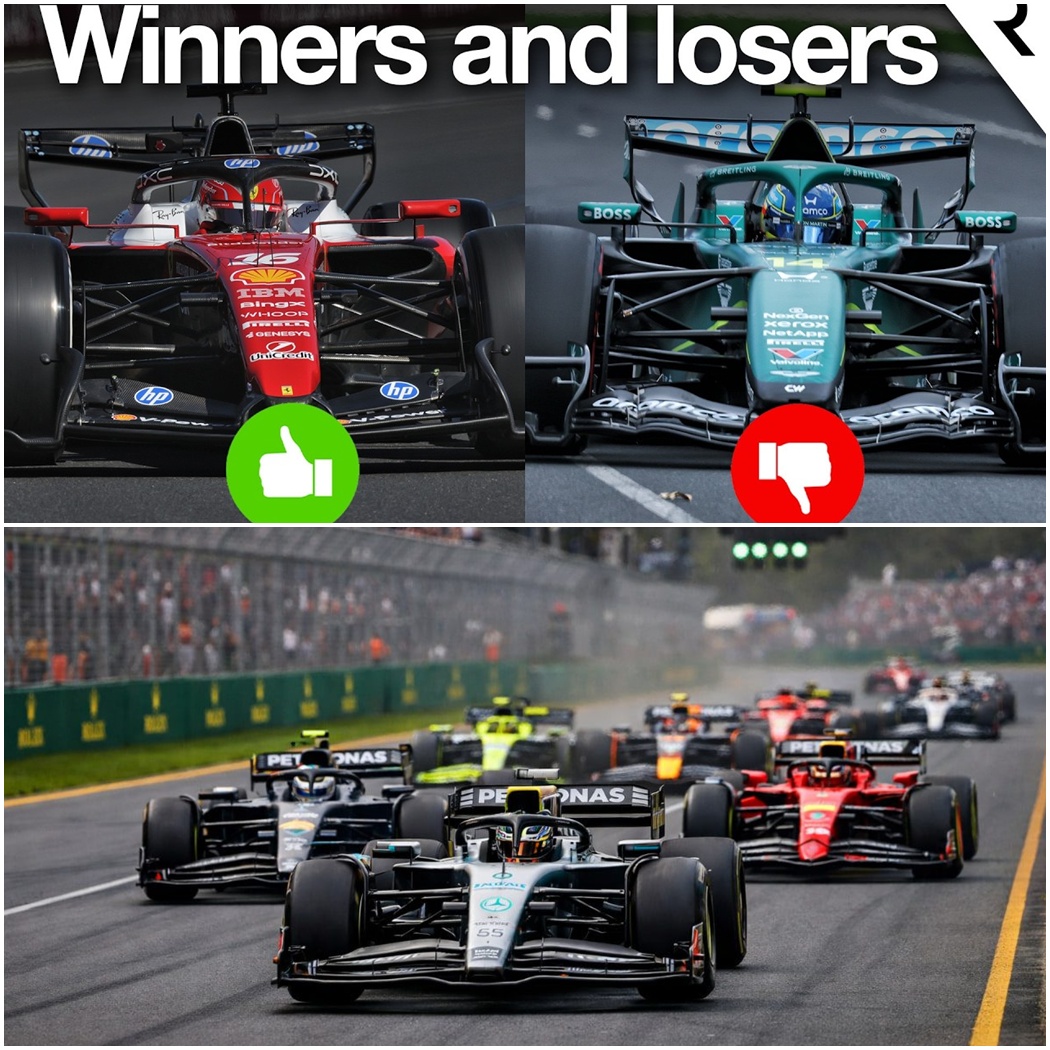
The roar of the engines in Melbourne did more than just signal the start of a new racing season; it heralded the birth of a terrifyingly fast and technically complex era of Formula 1. As the dust settles on the 2026 Australian Grand Prix, the paddock is grappling with a reality that many feared: the era of Silver Arrow dominance has returned with a vengeance. After years of struggling through the “ground effect” regulations, Mercedes has emerged from the 2026 rule shake-up as the undisputed benchmark, leaving legends like Red Bull and Ferrari staring at a technical chasm that may take months, if not years, to close.
The 2026 regulations were designed to be a “massive shake-up,” shifting the focus from pure aerodynamics to a sophisticated balance of sustainable fuels and advanced energy management. While every team entered the season claiming to have mastered the new power unit formula, the reality on the Albert Park tarmac told a very different story. Mercedes didn’t just win; they controlled the narrative from the first green light to the final checkered flag.
The Resurrection of the Silver Arrows
For Toto Wolff and the Mercedes AMG F1 team, the 2026 opener was a moment of profound vindication. After winning only seven races between 2022 and 2025, the team has successfully pivoted back to its roots as a power unit powerhouse. George Russell’s victory was a masterclass in controlled aggression. While he secured a pole position that initially seemed to flatter the car, the race pace of the Mercedes W17 was the true revelation.
The secret sauce for Mercedes appears to be a combination of peak power and superior energy management strategy. In an era where “harvesting” and “deployment” are the buzzwords of the paddock, Mercedes has found a way to extract more from their hybrid systems than anyone else. Even more frightening for the competition is the suggestion that Russell wasn’t even pushing to the limit. Once the lead was established, the Silver Arrows cruised, hiding their true potential from a grid that is already desperate for a way to fight back.
Ferrari’s Glimmer of Hope Amidst the Deficit
If there is a silver lining to be found in the wake of the Mercedes blitz, it resides in Maranello. Ferrari has established itself as the clear “best of the rest,” though the gap remains significant. After a qualifying session where Charles Leclerc trailed by 0.8 seconds, the race offered a more competitive picture. Leclerc’s thrilling wheel-to-wheel duel with Russell in the early stages proved that the Ferrari chassis is a formidable weapon.
However, the “false dawn” of the opening laps eventually faded. While the Ferrari was able to stay within touching distance through the corners, it lacked the relentless “deployment” needed to sustain a challenge on the straights. Ferrari fans can take solace in the fact that they are the primary challengers, but as the development war intensifies, the Scuderia must find a way to bridge the energy management gap before Mercedes disappears into the distance.
The Red Bull Engine Nightmare
Perhaps the most shocking storyline of the weekend was the “muted” performance of the reigning champions, Red Bull. Transitioning to their maiden in-house engine project—Red Bull Powertrains—the team faced the harsh reality of being a newcomer in the engine manufacturer game. While Isak Hadjar showed flashes of brilliance by snatching third on the grid, his race was a disaster defined by a depleted battery at the start and an eventual engine failure that ended his day after just ten laps.
Even the great Max Verstappen found himself in unfamiliar territory. A rare driver error in qualifying—perhaps exacerbated by the aggressive engine harvesting demands of the 2026 units—forced him to fight through the pack. While he executed a routine rise through the order, a fourth-place finish for Red Bull is a stark departure from the dominance they enjoyed over the previous three years. The “Red Bull/Ford” era has begun on the back foot, and the pressure on their engineers to fix the reliability and deployment issues is already reaching a boiling point.
McLaren’s Technical “No Man’s Land”
For McLaren and world champion Lando Norris, the Australian Grand Prix was a sobering experience. Despite using the same Mercedes power unit as the race winner, Norris finished a staggering 50 seconds adrift of Russell. The gulf in performance between the works Mercedes team and its customers was laid bare; McLaren is losing tenths of a second on the straights simply because they haven’t mastered the complex software logic required to manage the 2026 energy systems.
Norris’s frustration was evident, as he spent much of the race mired in midfield battles rather than challenging for the podium. McLaren’s chassis, once considered a benchmark, now appears to be slightly behind the curve. With imminent upgrades on the horizon, the team is in a race against time to ensure that 2026 doesn’t become a “wasted season” of playing catch-up.

The Midfield Heroes and Heartbreaks
Beyond the “Big Three,” the 2026 season has introduced a fascinating new hierarchy. Audi enjoyed a points-scoring debut, proving that they are ready to be a factor in the midfield, though reliability remains a major concern. The sight of Gabriel Bortoleto making Q3 only to be sidelined by technical issues highlights the “risk vs. reward” nature of the new Audi project.
In contrast, Haas and Racing Bulls have emerged as the surprise packages of the season. Haas, the Ferrari customer team, has seemingly nailed its preparation, delivering a consistent and well-understood car that is punching well above its weight. Meanwhile, at Racing Bulls, 18-year-old Arvid Lindblad made history as one of the youngest points-scorers ever. His composed performance silenced critics who suggested his promotion from Formula 2 was premature, proving that the next generation of F1 superstars is already here.
The Struggles of the Giants: Williams and Alpine
Not every team found success in the 2026 transition. Williams has found itself in “no man’s land,” with team boss James Vowles admitting the car is significantly overweight. For a team that has spent years focusing on 2026, being a backmarker is a dire indictment of their long-term planning.
Alpine’s situation is equally troubling. Despite switching to Mercedes power, neither driver made it out of Q2. The team is reportedly carrying an “aero injury,” with the car struggling significantly in high-speed corners. While a fix is promised for Japan, the team must simply survive the medium-speed corners of China without losing further ground.
Conclusion: The 2026 Development War Begins
As the circus moves to Shanghai, the message from Melbourne is clear: Mercedes has taken first blood, but the 2026 season will be an intense development war. The competitive picture we see today is merely a snapshot in time. In this new era, lap time won’t just come from a new front wing or a floor update; it will come from the lines of code that dictate how a battery releases its power.
Mercedes has established itself as the king of the “Silver Arrows era” once again, but with Ferrari hunting them down and Red Bull desperate to prove their engine project isn’t a failure, the drama of 2026 is only just beginning. The race in Australia was just the start—the real battle for the soul of Formula 1 has only just been ignited.