The Billion-Dollar Collapse: How Aston Martin and Honda Went from F1 Championship Hype to the Brink of Disqualification
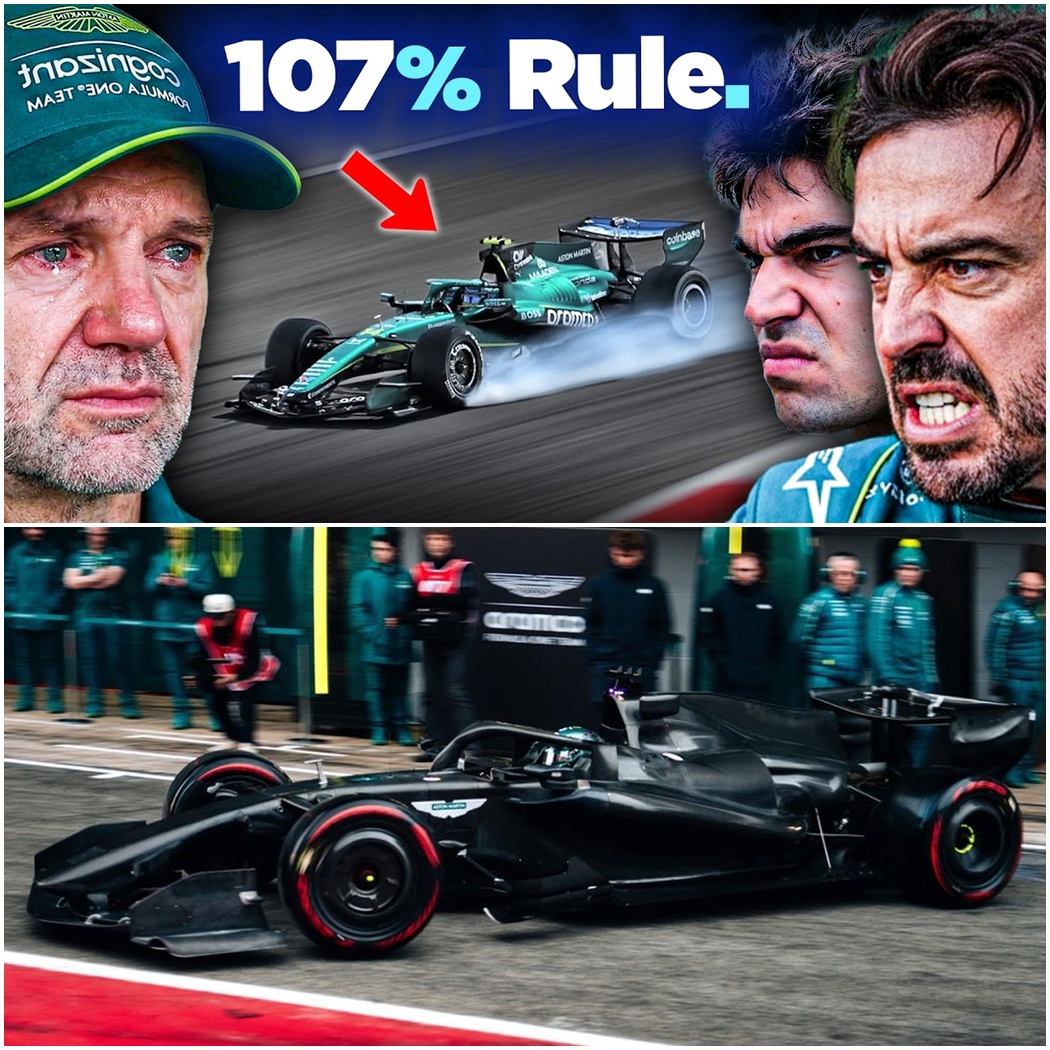
In the high-stakes, ruthless world of Formula 1, fortunes can change in the blink of an eye. Yet, even seasoned paddock insiders and veteran analysts are struggling to comprehend the sheer scale of the catastrophe currently unfolding at Aston Martin. Just weeks ago, this was the team on everyone’s lips. They were the undisputed champions of the winter break, the undisputed dark horse destined to upset the established hierarchy. Armed with the limitless financial resources of billionaire owner Lawrence Stroll, the backing of Saudi Arabia’s Public Investment Fund, the legendary design genius of Adrian Newey, and a renewed factory partnership with Honda, Aston Martin looked utterly terrifying. They had all the ingredients of a modern motorsport dynasty.
But as the dust settles on preseason testing in Bahrain, that golden dream has unraveled into a waking nightmare. Aston Martin is not just struggling; they are staring down the barrel of one of the most embarrassing collapses in modern Formula 1 history. They are a staggering four seconds off the pace of the leaders . They are slower than Cadillac’s 135.290 testing time, a brand-new entrant that has never turned a competitive wheel in the sport . And, most shockingly of all, there is a very real, mathematical possibility that their car might be deemed too slow to even legally start the upcoming Australian Grand Prix. How does a team with so much money, so much talent, and so much hype find itself in such an unprecedented crisis? The answers lie in a perfect storm of technical miscalculations, organizational brain drain, and a catastrophic reunion with an old ghost.

The Hype and the Heartbreak
To truly grasp the magnitude of this failure, we must first look back at the incredible expectations placed upon the Silverstone-based squad. When Aston Martin rolled out their new challenger, it was a work of aggressive, uncompromising art. Observers noted that it looked as though Adrian Newey and his engineering team had completely reinvented the aerodynamic rulebook, despite Newey only arriving in March of last year. The car was draped in intricate carbon-fiber wizardry, boasting aggressive sidepods and floor designs that left rival aerodynamicists scratching their heads. For a fleeting moment, it felt like Aston Martin was playing chess while everyone else was playing checkers.
The narrative was intoxicating. Lawrence Stroll had finally assembled the ultimate Formula 1 superteam. Honda, the engine manufacturer that had just powered Red Bull to years of utter dominance, was supposed to be the final piece of the championship puzzle. When the car hit the track for its shakedown, the atmosphere was electric. But the moment the stopwatch started ticking in Bahrain, the illusion shattered entirely.
During the crucial days of preseason testing, where teams normally log hundreds of laps to gather vital data, Aston Martin’s garage looked more like a triage center. Lance Stroll managed a pitiful six laps on the final day . Six laps. In a sport where mileage is directly correlated to understanding and performance, managing only a handful of tours around the circuit is akin to surrendering before the war has even begun. In the hyper-competitive arena of Formula 1, being four seconds slower than Ferrari is not just a gap; it is an entirely different postcode. It is the kind of deficit that gets team principals fired and sponsors demanding their money back.
The Core of the Crisis: Honda’s Catastrophic Power Unit
At the heart of this spectacular downfall is the very component that was supposed to propel them to glory: the Honda power unit. The Japanese manufacturer has made a stunning admission, taking responsibility for what can only be described as a catastrophic failure in engineering. Trackside General Manager Shintaro Orihara publicly conceded that the team failed to achieve their mileage targets, plagued by severe reliability issues and a frankly shocking shortage of spare parts before the season has even officially commenced.
But the reliability issues are only the tip of the iceberg. The most alarming revelation, brought to light at a recent F1 Commission meeting, is that the Honda engine cannot even meet the basic legal requirements for energy recovery, failing to reach the lower limit of 250 kW . Under the complex new hybrid regulations, power units are required to harvest this electrical energy just to function normally. They are not just losing the development race against Ferrari, Mercedes, and Red Bull; they are failing to clear the absolute baseline standard of the rulebook.
How did a manufacturer that just dominated the sport fall so far behind? The root cause is a staggering misstep in corporate strategy. Honda famously decided to stop developing Formula 1 engines at the end of 2021 . During this period, they retained only a skeleton crew to maintain the frozen engine regulations for Red Bull. By the time the Honda board reversed its decision in mid-2023, lured back by the appeal of the incoming regulations, the damage was already terminal. The brilliant minds and institutional knowledge that had built their championship-winning engines had been reassigned to other projects or had left the company entirely. While rivals were actively developing their new engines for nearly two years, Honda was effectively starting from scratch.
The Internal Civil War: Gearbox vs. Engine
As if the underpowered and unreliable Honda engine wasn’t enough, Aston Martin has inadvertently compounded their misery with a severe integration issue. In a bid to become a true, independent works team, Aston Martin opted to design and manufacture their own gearbox for the very first time, severing their previous reliance on customer parts.
In theory, this gives the team total control over the rear-end packaging and suspension geometry. In practice, it has created a catastrophic communication breakdown between the chassis and the power unit. The new in-house gearbox is reportedly failing to synchronize with the Honda engine. Instead of working in mechanical harmony, the two critical systems are effectively fighting each other. This constant lack of communication causes the car to behave erratically, making it incredibly difficult for the drivers to control and leading to a cascade of mechanical breakdowns.
The Looming Threat: The 107% Rule and the Melbourne Nightmare
With the Australian Grand Prix rapidly approaching, the atmosphere within the Aston Martin camp must be one of pure panic. They are not just fighting to score points; they are fighting for the fundamental right to participate. Formula 1 employs a strict regulation known as the 107% rule. If a driver’s best qualifying lap is more than 107% of the fastest time set, they are generally not permitted to start the race, deemed a mobile roadblock and a significant safety hazard to the rest of the field.
During testing, Aston Martin’s best time hovered dangerously around 104.34% of the benchmark . On paper, they have a tiny margin of safety. However, testing times are notoriously deceptive. The top teams were almost certainly sandbagging, running their engines at lower power modes to hide their true potential. Aston Martin, conversely, was likely pushing their fragile package to the absolute limit just to gather basic operational data. When the gloves come off in Melbourne and the front-runners turn their engines up to maximum attack, that gap will almost certainly widen, pushing Aston Martin precariously close to an unforgivable disqualification.
A Cruel Irony: Fernando Alonso’s Returning Nightmare
Perhaps the most heartbreaking aspect of this entire saga is the plight of Fernando Alonso. At 44 years old, the two-time World Champion is defying the laws of biology, driving with a hunger that shames men half his age, yet he faces another Honda disaster just as his contract nears expiration . He committed his twilight years to Aston Martin because he genuinely believed in Lawrence Stroll’s vision and the transformative power of Adrian Newey’s arrival. He wanted one final, glorious shot at a third world title.
Instead, he finds himself trapped in a cruel, inescapable time loop. The parallels to his disastrous stint with McLaren-Honda a decade ago are painfully obvious. He left McLaren to escape the Honda nightmare, moving through the midfield wilderness before finally finding a competitive home at Aston Martin. And now, the very manufacturer that ruined his mid-career has returned to haunt his final chapter.
Is There Any Hope for Salvation?
In the relentless gloom, there are tiny, desperate glimmers of hope. The FIA’s new engine regulations feature an Additional Development and Upgrade (ADU) system, specifically designed to help struggling manufacturers catch up, granting additional in-season upgrades for teams more than 4% behind the best . Because Honda is so comprehensively off the pace, they will be granted maximum upgrade allowances during the season.
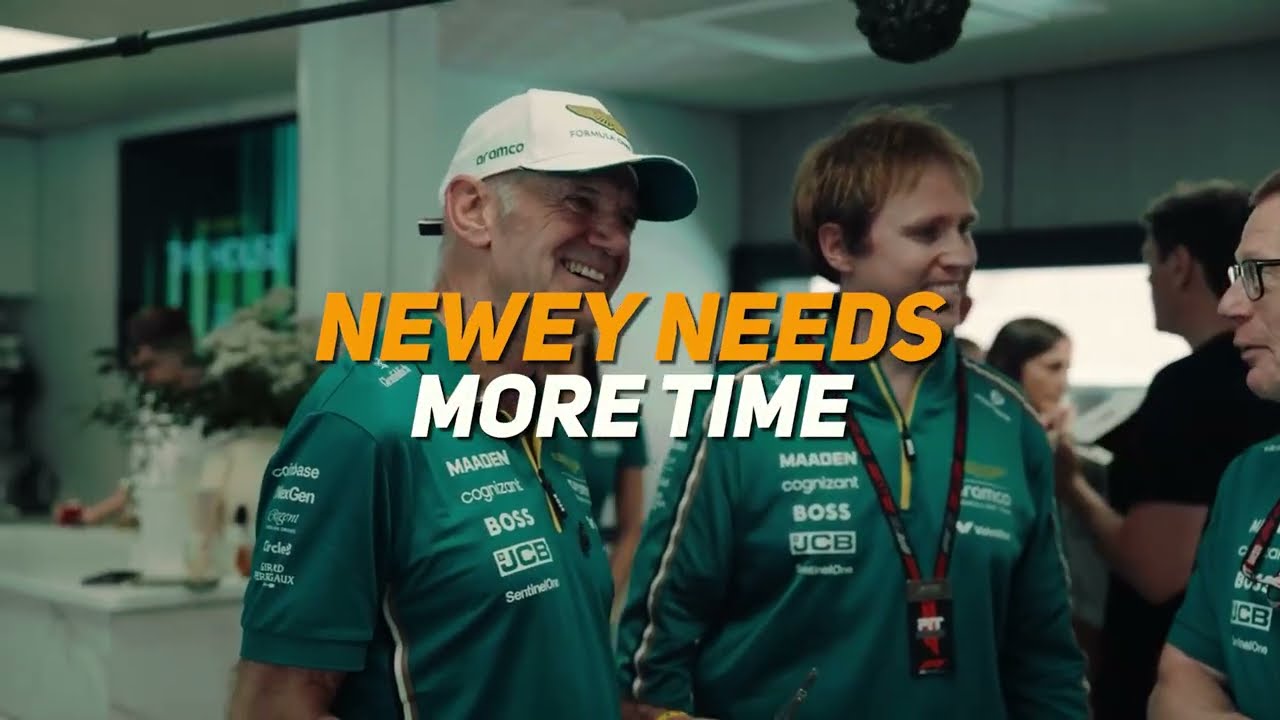
Furthermore, internal sources claim that Honda has identified the root causes of their Bahrain disaster and expects to introduce major technical fixes by the Chinese Grand Prix . Adrian Newey remains quietly confident that once the engine situation is stabilized, the underlying aerodynamic platform is sound enough to be highly competitive. But these are long-term promises in a sport that demands immediate results.
Conclusion
Aston Martin has built a billion-dollar house of cards, and the wind is blowing fiercely. They have all the money, all the facilities, and the greatest aerodynamic mind in the history of the sport. Yet, they have been completely undone by a catastrophic failure in project management, a rushed engine program, and a complete lack of synergy. As the paddock packs up and heads to Melbourne, the entire motorsport world will be watching with bated breath. Will they find a miraculous fix, or are we about to witness the most expensive failure in modern Formula 1? The clock is ticking.








