The Roar Returns: Formula 1 Confirms Shocking Comeback of V8 Engines by 2031
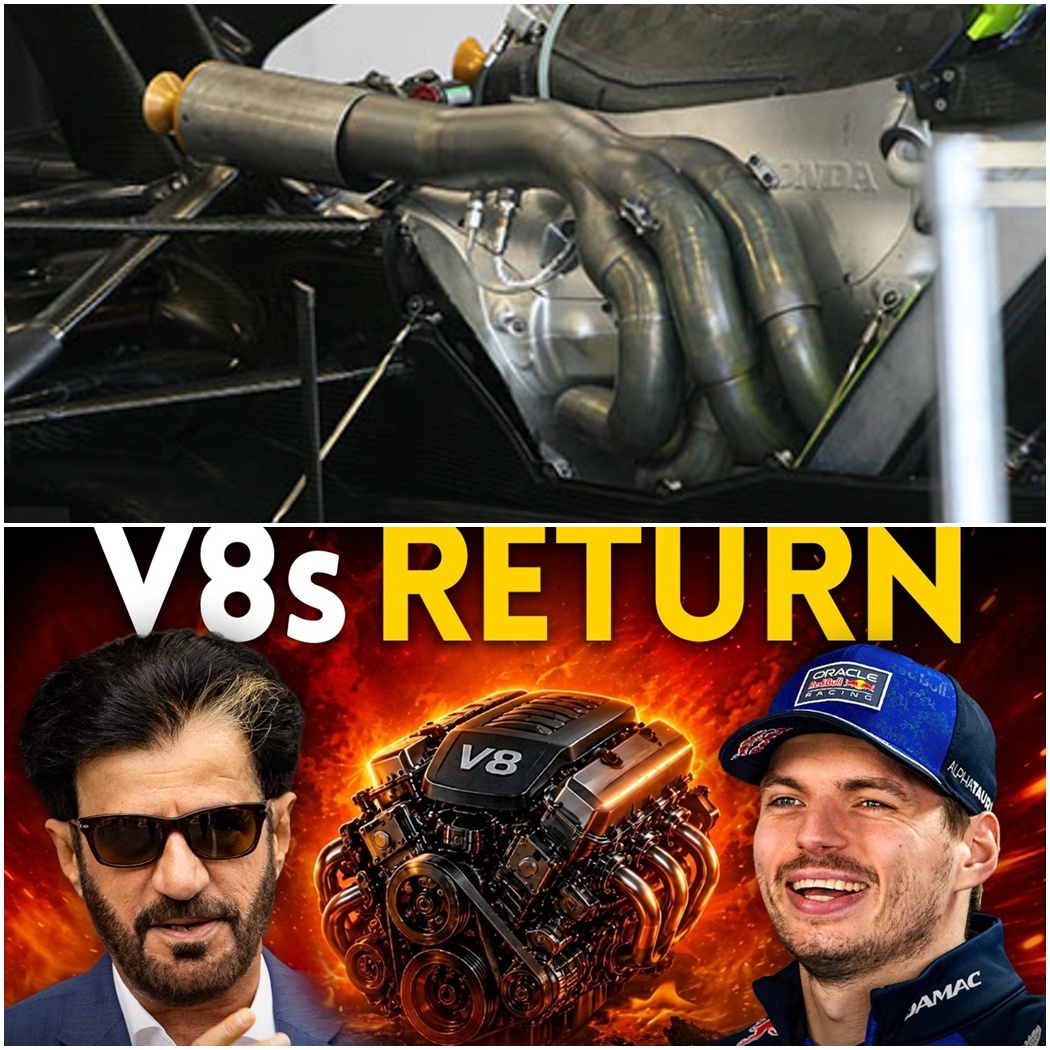
In a spectacular twist that has sent shockwaves through the global motorsport community, the era of muted, hyper-complex hybrid engines in Formula 1 is officially facing its twilight. The high-revving, spine-tingling roar of the V8 engine is set to return to the pinnacle of motorsport. The bombshell news, which broke over the highly anticipated Miami Grand Prix weekend, caught the entire racing paddock, media analysts, and fans completely by surprise. For the millions of purists who have spent the last decade mourning the loss of the sport’s visceral acoustic soul, this announcement feels like a long-overdue victory.
The confirmation did not come from an anonymous paddock rumor or a speculative engineering leak. It came directly from the very top of the sport’s governing hierarchy. Immediately following the race in Miami, FIA President Mohammed Ben Sulayem sat down for a remarkably candid interview with the US-based publication The Drive. In that pivotal conversation, he outlined a radical new vision for the future of Formula 1—a vision that boldly steps backward into history in order to secure the sport’s long-term commercial and emotional survival.

To understand the magnitude of this pivot, one must look at the deeply fractured landscape of modern Formula 1 regulations. The current 1.6-liter V6 turbo-hybrid power units were introduced in 2014, replacing the beloved screaming V8s that dominated the grid from 2006 to 2013. At the time, the V6 hybrid was championed as an absolute engineering marvel, a necessary technological bridge to align the extravagant world of grand prix racing with the rapidly changing, environmentally conscious global automotive industry.
However, as the years progressed, the narrative shifted from technological wonder to sporting burden. The original blueprint for the upcoming 2026 engine regulations doubled down on this complex philosophy. Engine manufacturers pushed heavily for a 50/50 power split between the internal combustion engine and the electrical battery systems. The overarching goal was to triple the electrical output to roughly 350 kilowatts. On paper, in a corporate boardroom, this massive increase in electrification was designed to attract massive new automotive manufacturers to the grid, drastically reduce fossil fuel consumption, and align perfectly with global net-zero sustainability mandates.
On the actual racetrack, however, the reality was starkly different. The pursuit of this technological utopia resulted in cars that are fundamentally massive, incredibly heavy, and astonishingly expensive. During the first three Grands Prix of the current year, the backlash from both the elite drivers sitting in the cockpits and the fans watching from the grandstands was absolutely savage. Drivers openly complained about the sluggish driving dynamics, comparing the immensely heavy cars to driving tractors or buses through tight street circuits. The visceral thrill of wrestling a lightweight, agile racing machine on the absolute ragged edge of physics had been slowly engineered out of existence.
The outcry was so intense that emergency tweaks were introduced prior to the Miami race. While these temporary adjustments went some way toward appeasing the grid, they were fundamentally just bandages on a deeply structural wound. The core complaints remained utterly unaddressed. The sport was marching toward a future that its primary stakeholders—the drivers who risk their lives and the fans who pay for the tickets—actively despised.

In his interview, Mohammed Ben Sulayem addressed this existential crisis with unprecedented bluntness. He acknowledged that the current V6 hybrid powertrain, conceived over thirteen years ago, had served its purpose but had essentially run its course. “We now have this engine which is a 1.6-liter, and it did what it had to do in a way, but it’s in its 14th year,” the FIA President explained.
He highlighted the suffocating complexity of the current units, which utilize incredibly intricate systems like the MGU-H (Motor Generator Unit – Heat) and the MGU-K (Motor Generator Unit – Kinetic) tied to massive battery packs and turbochargers. “It’s such a complicated engine and a very expensive engine for R&D, and also for the sale to a customer team. But if you make it simple, others can afford it.”
The solution to the crippling weight, the astronomical costs, and the lack of emotional engagement is a return to a simplified architecture. “For the sake of the sustainability of the business, the cost, the efficiency, the lightweight, the sound for the fans—I think the V8 ticks many boxes,” Ben Sulayem stated.
However, this upcoming generation of V8 engines will not simply be a nostalgic carbon copy of the gas-guzzling monsters from 2006. It will be a highly modernized, ecologically responsible interpretation of raw power. The new V8 will still feature hybrid elements, but it will comprehensively abandon the controversial 50/50 power split. Instead, the electrical component will be drastically scaled back, likely representing only 10 to 20 percent of the total output.
The raw numbers dictate a fascinating engineering challenge. Ben Sulayem noted that to achieve the desired performance metrics, the displacement of the new V8s will sit somewhere between 2.5 and 3.0 liters. The internal combustion engine alone will generate approximately 650 horsepower. When paired with the streamlined electrical assistance, the total output will reach an exhilarating 880 horsepower.
The true magic behind this transition, and the reason the FIA can justify bringing back larger combustion engines in a fiercely eco-conscious era, lies in the fuel. These new V8s will run exclusively on 100 percent sustainable fuels. These are not traditional fossil fuels pumped from the earth; they are advanced biofuels, currently being derived from renewable sources such as switchgrass, or created through complex synthetic carbon-capture processes. This scientific breakthrough completely opens the door to bigger, cheaper, and vastly more emotional engines. The FIA argues that running a simpler V8 on clean fuel is actually a more sustainable long-term solution than manufacturing thousands of pounds of highly toxic lithium-ion batteries.
For the fans, the most critical question immediately revolves around the noise. Will these new engines scream like the legendary cars of the past? The answer is a heavily caveated yes. They will sound infinitely better than the muffled, vacuum-cleaner drone of the early V6 hybrids, producing a proper, aggressive mechanical roar. However, fans expecting the ear-piercing, glass-shattering shriek of an engine revving to 18,000 RPM will need to temper their expectations.

The FIA President was very clear on this specific engineering limitation. He explained that pushing a modern engine to rev beyond 15,000 or 16,000 RPM introduces profound complications. “Once you go there, the frequency is really annoying, so we have to be responsible,” he noted. More importantly, pushing the RPM limits into the stratosphere causes the price of research and development to absolutely skyrocket due to the exotic materials and ultra-refined tolerances required to prevent the engines from exploding under that extreme stress. The new V8s will prioritize a deep, resonant, muscular growl over a high-pitched scream, striking a delicate balance between acoustic pleasure and financial sanity.
The political mechanics of when this monumental shift will actually occur are currently in motion behind closed doors. The FIA has already held a series of previously undisclosed, highly classified meetings with the technical directors of the various teams. According to Ben Sulayem, the return of the V8 is absolutely a question of “when, not if.”
The hard, uncompromising deadline for the introduction of these new engines is the 2031 season. However, there is a very real possibility that the timeline could be accelerated. If four out of the six current power unit manufacturers on the grid formally vote in favor of an early introduction, the V8s could arrive by 2030. This would mean enduring only four seasons of the highly criticized 2026 regulations before the golden era returns. Given the overwhelming public outcry and the intense pressure from social media, it is highly likely that fan campaigns will relentlessly pressure the manufacturers to push for the 2030 implementation.
If the manufacturers stubbornly refuse to accelerate the timeline to protect their existing investments in the V6 platform, the FIA is fully prepared to force the issue in 2031 without requiring their permission. The governing body firmly believes this change is fundamentally necessary for the health of the entire sport, delivering fairer competition and a more sustainable business model.
Perhaps the most fascinating ripple effect of this engine revolution is how it will radically alter the political power dynamics of the pit lane. Currently, Formula 1 is deeply divided between massive works teams who build their own engines (like Ferrari, Mercedes, and Renault) and customer teams who must purchase them (like McLaren, Williams, and Haas).
Creating a power unit as complex as the current V6 hybrid is virtually impossible for an independent racing team. However, transitioning to a much simpler, naturally aspirated or lightly turbocharged V8 dramatically lowers the barrier to entry. This reality presents a massive, unprecedented opportunity for teams like McLaren. Currently, McLaren is forced to rely on Mercedes for their engines, a relationship that has reportedly grown increasingly strained as McLaren feels they are not receiving the exact same engine mapping capabilities as the factory Mercedes team.
McLaren already possesses a world-class automotive division that produces some of the most spectacular high-performance, turbocharged V8 engines on the planet for their road cars. The new regulations could liberate McLaren, allowing them to finally sever their dependency on a fierce rival and bring their engine production entirely in-house.
They are not alone in this ambition. According to industry reports from Detroit, General Motors, under their Cadillac brand, is actively pursuing an entry into Formula 1. While they have been developing an electrified V6 to meet the current impending rules, their engineers are reportedly already pivoting resources to work on a V8 engine powered by sustainable fuels, perfectly timing their ultimate grid assault with the new regulations.
The FIA has realized a harsh, undeniable truth: the general public does not fully comprehend the convoluted nuances of “net-zero” corporate buzzwords, but they deeply, passionately understand the visceral thrill of a roaring engine and a lightweight car dancing on the absolute limit of grip. The responsibility of the governing body is to ensure safe, clean racing, but that cannot come at the total expense of the entertainment product.
By utilizing sustainable biofuels to power simplified V8 engines, Formula 1 has seemingly found the holy grail. They have discovered a way to appease the strict environmental demands of modern corporate sponsors while simultaneously giving the drivers the lightweight, agile cars they crave, and returning the spine-tingling acoustic drama that made the fans fall in love with the sport in the first place. The road to 2031 may still hold political hurdles, but for the first time in over a decade, the future of Formula 1 sounds genuinely spectacular.








