A Championship Dream Deferred: The Inside Story of Aston Martin’s Disastrous 2026 Preseason and Fernando Alonso’s Recurring Nightmare
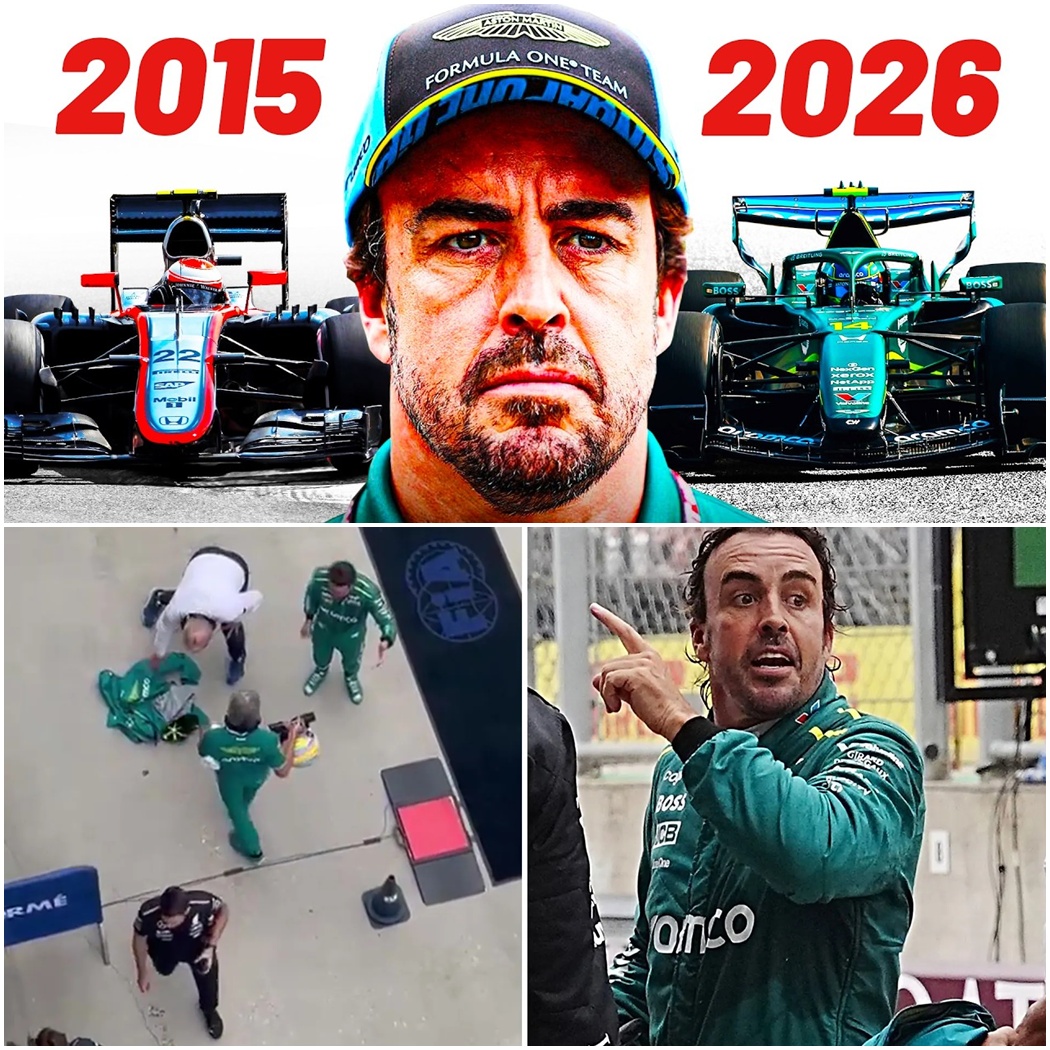
The hype surrounding the Aston Martin Aramco Formula One Team heading into the 2026 season was nothing short of astronomical. Backed by the immense financial resources of billionaire Lawrence Stroll, the team had seemingly assembled the ultimate motorsport dream team. They secured the exclusive factory backing of Honda to supply their power units. They retained the services of two-time world champion Fernando Alonso, a man still driving with the ferocious hunger of a rookie. And, perhaps most significantly, they managed to poach Adrian Newey, the most decorated and revered aerodynamicist in the history of the sport, to lead their technical department. On paper, the AMR26 was destined to be a world-beater, the final piece of the puzzle that would propel Aston Martin to the very pinnacle of global motorsport.
Instead, what unfolded over the course of the brief 2026 preseason testing period was an unmitigated disaster. The stark reality is that the heavily funded, star-studded Silverstone outfit arrived at the track not with a championship contender, but with a fundamentally flawed, woefully unreliable machine that threatens to derail their entire campaign before the first set of red lights even go out. Aston Martin’s start to the highly anticipated new regulation era has not just been disappointing; it has been an outright embarrassment. To put their struggles into a brutal perspective, the established giant failed to even match the lap counts and reliability metrics of absolute newcomers Cadillac. This is deeply ironic, considering the Formula 1 establishment initially pushed back heavily against Cadillac’s entry, citing fears that the American outfit would be an embarrassing backmarker that would bring the sport into disrepute. Right now, it is Aston Martin wearing that exact label.
The warning signs were flashing bright red right from the very beginning. When the Formula 1 paddock gathered for the initial shakedown in Barcelona, Aston Martin was conspicuously absent for the early running. The AMR26 did not break cover until Thursday, meaning the team completely squandered a massive portion of their allocated three days of running. While missing a shakedown isn’t always a fatal blow—Williams, for instance, also faced severe delays—what happened next sent shockwaves through the Aston Martin garage. When Lance Stroll finally took the car out onto the Spanish asphalt, he managed a grand total of six laps before the car broke down entirely. The following day, Alonso managed to put 61 laps on the board, but it was heavily caveated; the team was forced to run the car in a severely reduced engine mode, limiting its top speed on the straights just to keep it from tearing itself apart.
The nightmare escalated dramatically when the paddock moved to the Bahrain International Circuit for the final, crucial phase of testing. This is where teams traditionally turn up the engines, simulate race distances, and hunt for ultimate qualifying performance. For Aston Martin, it was merely an exercise in survival. On the opening day, Lance Stroll suffered a terrifying engine anomaly that suddenly dropped his revs under heavy braking, pitching the car into a violent spin and leaving him beached in the gravel trap. The very next day, it was Alonso’s turn to suffer. A catastrophic battery-related failure completely shut the car down mid-lap, leaving the frustrated Spaniard stranded by the side of the track and instantly terminating their run plan for the day.
The situation grew so dire that on the final day of testing, it wasn’t even Aston Martin that addressed the media, but Honda. The Japanese manufacturer released a highly concerning statement revealing that due to the sheer volume of reliability issues, they had literally run out of spare parts to rebuild the power units. They were forced to dictate a heavily restricted run plan, limiting the team to short, data-gathering stints with agonizing thirty-minute cooling intervals in between. Yet, even that conservative plan proved too ambitious. Stroll managed a pathetic six untimed installation laps on the final day before the team mercifully packed up their garage and ended their miserable preseason. Across both Barcelona and Bahrain, Aston Martin held the humiliating distinction of being the only team on the grid entirely incapable of logging 100 laps in a single day.

To fully grasp the magnitude of this failure, one must look at the brutal mathematics of their track time. Aston Martin averaged a mere 248.8 kilometers of running per day. To seasoned Formula 1 observers, that number triggers a cold sweat. It is marginally better than the 145.8 kilometers Honda managed during their infamously catastrophic return to the sport with McLaren in 2015, but it is almost identical to the 247.5 kilometers they limped through during the disastrous 2017 preseason. This lack of vital mileage creates a devastating snowball effect within the team. The brand-new 2026 regulations place a massive emphasis on complex energy recovery and deployment. Drivers essentially have to completely recalibrate how they drive a Formula 1 car, learning the optimal moments to harvest energy without locking the rear brakes and inducing sudden instability. Because the car simply refused to run, Alonso and Stroll are heading into the season opener completely blind, lacking the fundamental knowledge required to race these new hybrid systems effectively.
While it is easy to point the finger solely at Honda, the reality is far more complex. The chassis side of the operation, spearheaded by the legendary Adrian Newey, is also suffering from severe growing pains. In a bid to become a truly independent factory team, Aston Martin deliberately severed their long-standing technical ties with Mercedes. They are no longer purchasing customer gearboxes or rear suspension layouts. For the 2026 season, everything is entirely bespoke. They are trying to harmonize a brand-new Honda power unit, the very first Aston Martin chassis designed under Newey’s ultimate direction, a completely new in-house gearbox, and a unique, highly ambitious rear suspension layout with aggressively high mounting points. Integrating so many new, untested elements simultaneously is a monumental engineering tightrope walk, and right now, the team is losing its balance.
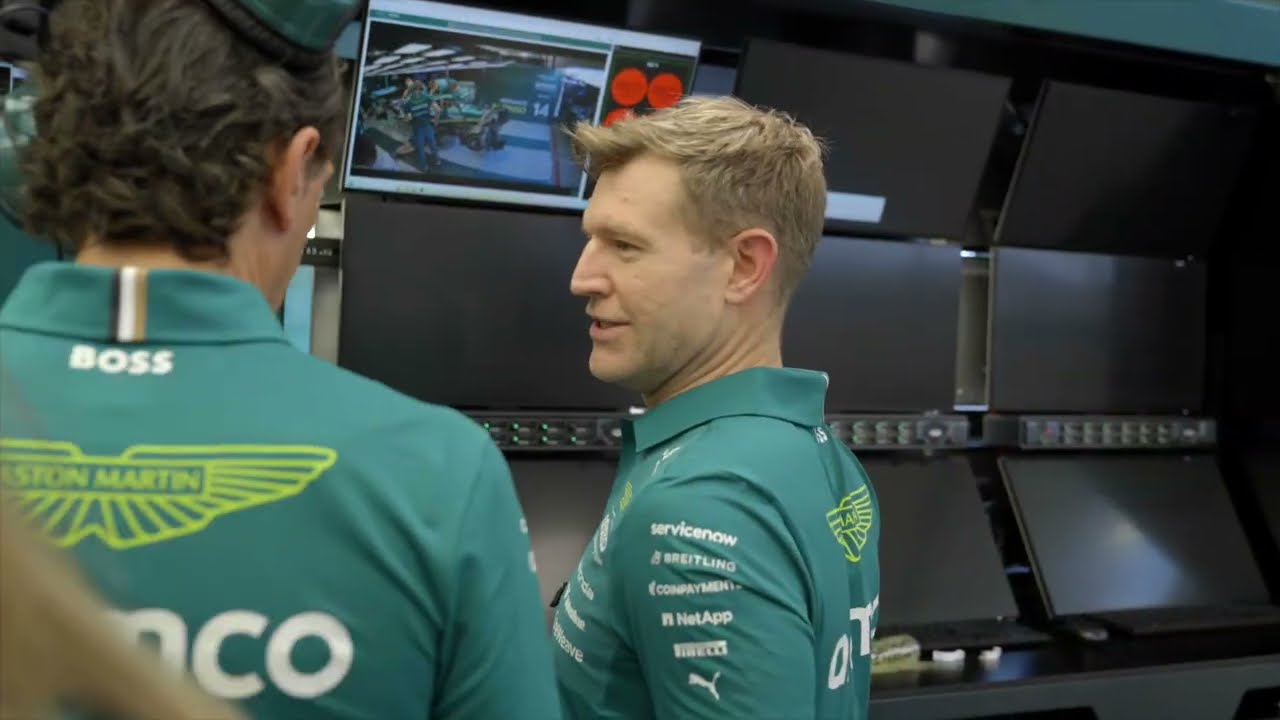
Compounding the integration issues is the timeline of Newey’s arrival. Because of his contractual obligations with Red Bull Racing, the technical mastermind could not officially begin work at Aston Martin until March of 2025. This meant that while rival teams were actively putting their 2026 concepts into the wind tunnel the very second the aerodynamic testing ban lifted in January, Aston Martin deliberately held back. They waited for Newey to arrive and define the overall conceptual direction, meaning a physical model of the AMR26 didn’t hit the wind tunnel until mid-April. This put the team a staggering four months behind the developmental curve, forcing them into an incredibly compressed, high-pressure research and design cycle. The car quite literally came together at the very last minute, which directly resulted in their late arrival in Barcelona.
Honda, for their part, has attributed the crippling unreliability to “abnormal vibrations” emanating from the internal combustion engine, which are actively destroying the sensitive battery packs. However, they have alarmingly admitted that they cannot yet pinpoint the exact root cause of these destructive frequencies. Furthermore, the car is clearly suffering from severe cooling issues. The engine cover of the AMR26 features massive, drag-inducing cooling gills that are noticeably larger than anything else on the grid. Whether this is a flaw in Honda’s thermal management or a direct consequence of Newey aggressively demanding “size zero” packaging to maximize aerodynamic performance remains a fiercely debated topic in the paddock.
For Fernando Alonso, this entire scenario is painfully, almost laughably familiar. It is impossible not to draw direct comparisons to his deeply toxic stint with McLaren-Honda from 2015 to 2017. Back then, McLaren’s sheer arrogance and Alonso’s highly vocal, deeply public criticisms completely destroyed the relationship between the British team and the Japanese manufacturer. Alonso’s infamous “GP2 engine” radio message at Honda’s home race in Japan wasn’t a slip of the tongue; it was a calculated insult that left deep scars. While Alonso has matured and supposedly mended those fences, early rumblings from the Aston Martin camp suggest a dangerous return to that old rhetoric. The narrative is already forming that the Newey-designed chassis is fundamentally brilliant, and that the team is solely being held back by a substandard Honda engine. If Aston Martin fails to foster a collaborative, honest environment and instead resorts to pointing fingers, this partnership will implode just as spectacularly as McLaren’s did.
The only saving grace for Aston Martin is the heavily regulated modern landscape of Formula 1. Unlike the McLaren days, cost caps prevent teams from simply throwing infinite money at a problem until it disappears. However, the FIA has implemented safety nets. The “Additional Development and Upgrade Opportunities” (ADO) rules dictate that if a brand-new power unit manufacturer is found to be at a significant, fundamental disadvantage, the governing body can grant them special dispensation to introduce reliability and performance upgrades to catch up to the pack. Honda has the engineering might to figure this out, and Aston Martin has the facilities to eventually perfect the chassis.
They will undoubtedly improve as the season grinds on. They have far too many brilliant minds and far too much financial firepower to remain stranded at the back of the grid forever. But Formula 1 is a sport dictated by the relentless ticking of the clock, and for Fernando Alonso, time is the one luxury he simply does not possess. He orchestrated this highly publicized move to Aston Martin with the singular, burning desire to secure a third world championship before finally bowing out of the sport. Right now, as mechanics desperately scramble to piece together a broken car ahead of the season opener, that dream of a fairy-tale ending looks exactly like what it is: a distant, fading illusion.








