The Genius Loophole: How Red Bull’s Controversial Sharp-Edged Sidepod Upended the Formula 1 Grid
Formula 1 is a sport where championships are rarely won solely on the race track; they are overwhelmingly decided deep within the secretive confines of wind tunnels, supercomputers, and the meticulously combed pages of the technical rulebook. We are currently witnessing a fascinating and highly volatile early phase of the development race, a period that has already profoundly altered the competitive pecking order. Following a string of unexpectedly difficult races, Red Bull Racing arrived at the recent Miami Grand Prix carrying a massive, transformative conceptual overhaul for their RB22 challenger. The upgrade dramatically targeted the car’s most glaring weaknesses and introduced a highly curious, staggeringly clever aerodynamic feature that the sport’s governing body, the FIA, has begrudgingly deemed legal—at least for now.
To fully appreciate the sheer brilliance of this engineering masterstroke, we must first look at the desperate situation Red Bull found themselves in prior to the American race weekend. During the gruelling rounds in China and Japan, the reigning champions looked astonishingly mortal. The RB22 had essentially regressed into a midfield contender, plagued by a severe lack of aerodynamic load. More alarmingly, the car was wildly unpredictable. Star drivers Max Verstappen and Isack Hadjar routinely voiced their extreme frustrations over the team radio, complaining bitterly that the car behaved entirely differently from lap to lap, let alone from one practice session to the next. Verstappen noted that the car violently swung between extreme understeer and snapping oversteer, utterly sapping his confidence. Coupled with a persistent steering issue that completely numbed the crucial feeling he needed through the steering wheel, Verstappen found himself entirely unable to attack the corners with his trademark aggression. They were guessing what the car would do every single time they applied the brakes.
However, the narrative was violently flipped in Miami. Verstappen was completely transformed, operating as a genuine pole position contender. Had it not been for an unfortunate spin on the opening lap, he would have undoubtedly been firmly entrenched in the battle for the top step of the podium. The absolute key to this miraculous resurrection was a comprehensive, front-to-back overhaul of the RB22 that was absolutely dripping with classic, uncompromising Red Bull innovation.
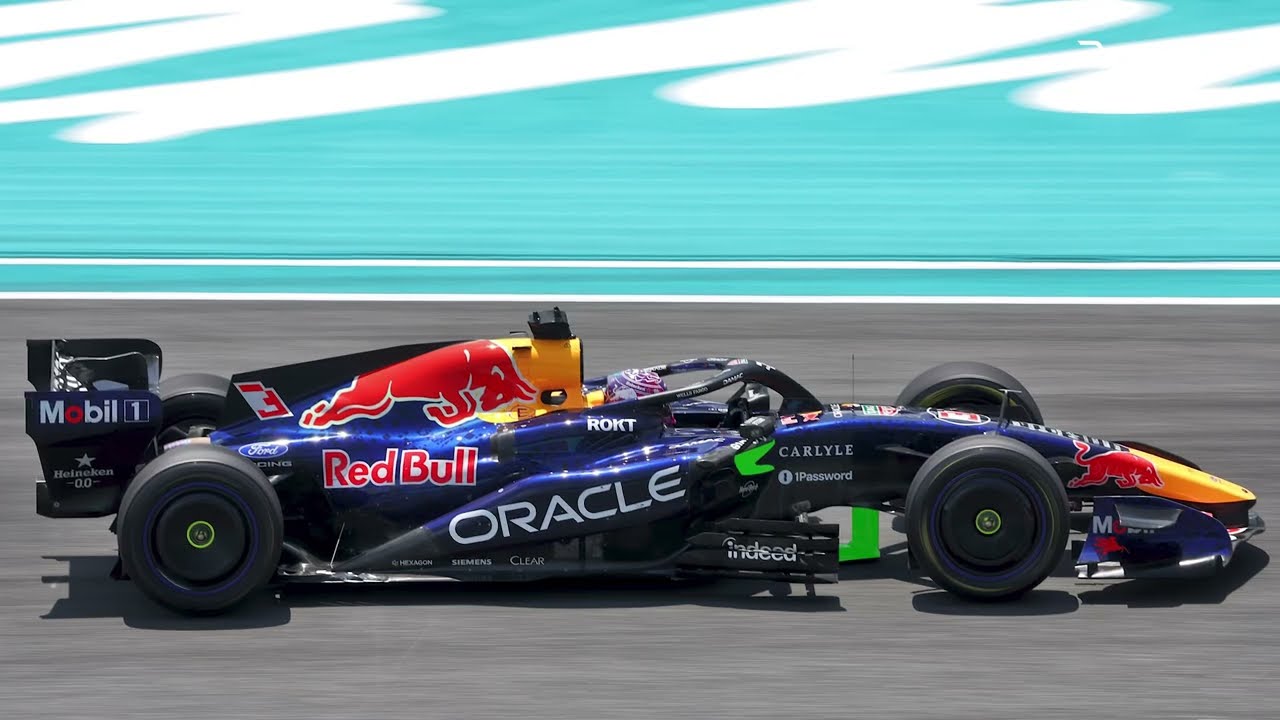
At first glance, the visible changes were incredibly striking. The engineers added a massive dive plane to the front wing, fundamentally altering how the airflow is managed over the front axle. Even more bizarrely, they completely rotated the new rear wing into an upside-down position, a visually jarring modification that immediately caught the attention of the entire paddock. Yet, the true magic—the absolute heart of this aerodynamic revolution—was hidden within the immensely complex floor and bodywork architecture in the middle of the car.
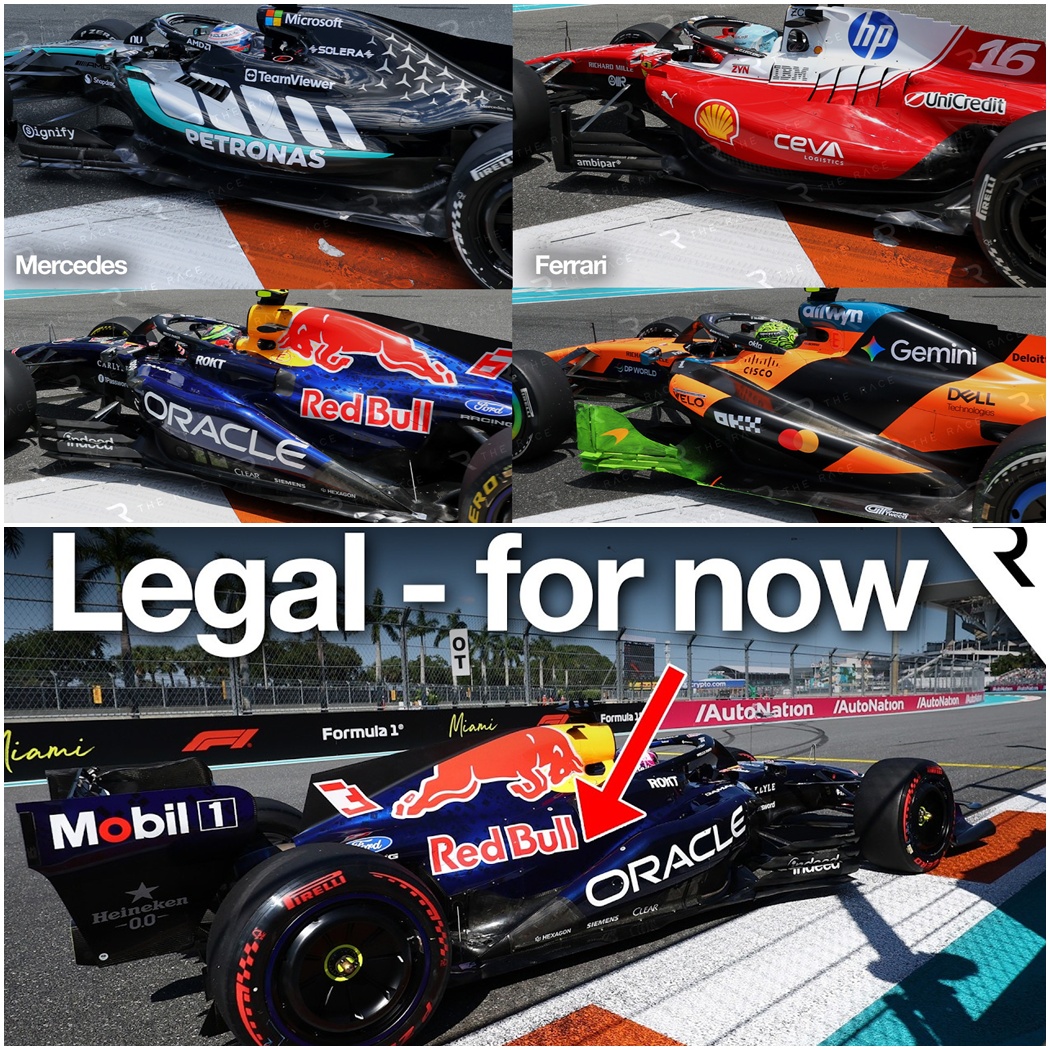
Red Bull introduced a comprehensively revised bib geometry, a completely new sidepod inlet, and a heavily updated engine cover. This new cover featured high-walled sidepods and wide, sweeping ‘water slides’, indicating a massive and very clear shift in their core bodywork concept. This radical new design completely set the RB22 apart from every other elite team on the grid. If you look at Ferrari and Mercedes, they feature deep sidepod undercuts that stretch all the way along the car, gently sloping into a downwash shape that leaves the floor fully exposed beneath. McLaren’s highly effective design is slightly closer to Red Bull’s new philosophy, featuring a sidepod that falls away from front to back, but their shape is highly consistent, not nearly as steep in its decline, and boasts a mostly flat top surface. Crucially, the rear of the McLaren sidepod is beautifully rounded off and joins the floor much further inboard. This specific junction is the absolute key area of difference that makes the Red Bull a masterpiece of loophole exploitation.
The most innovative aspect of the Red Bull is not the high-walled water slides themselves; those have been prominent on several ground-effect cars, notably the 2022 Alpine and Red Bull’s own previous iterations. What truly separates the RB22 is what McLaren Team Principal Andrea Stella respectfully described as a highly smart and innovative use of “legality concessions.” Stella was pointing directly to a jagged, sharp fence located at the extreme rear corner of the sidepod, exactly where the bodywork meets the floor.
In modern Formula 1, the technical regulations heavily mandate that sidepod elements must feature smooth, curved transitions. You simply do not see sharp edges on these bodywork surfaces. However, Red Bull’s unique shape completely bucks this trend, allowing them to extend the outside of the sidepod much further back and considerably further outboard onto the floor. This completes a clearly different overall aerodynamic structure that rival engineering departments genuinely did not believe was legally possible.

To understand how Red Bull achieved this, we must dive into the incredibly dense language of the FIA technical regulations. Formula 1 cars are virtually divided into numerous ‘reference volumes’ or ‘legality boxes’. These invisible, strict 3D boxes impose completely different geometric demands on different sections of the car. The front of the sidepod is strictly governed by the side inlet reference volume, but the rearward section typically falls within the engine cover rules. The regulations normally force all sidepod and engine cover bodywork to be beautifully and smoothly curved and entirely continuous. This rule exists explicitly to prevent teams from creating sharp fins, discontinuous edges, or wildly complex multi-element structures. The FIA heavily restricts this area on the grounds of safety, to avoid creating dangerously jagged carbon fibre edges, and to prevent a sudden explosion of incredibly complex, airflow-disrupting appendages that could have unintended, turbulent consequences for cars following behind.
Specifically, the rules dictate that these aerodynamic surfaces cannot curve inwards with a concave radius of less than 50 millimetres, nor can they curve outwards with a convex radius of less than 75 millimetres. Yet, Red Bull somehow possessed a sharp edge. How? The genius lies in the precise classification of the parts. The specific area where Red Bull’s sidepod violently meets the floor is cleverly classified as part of the ‘floor corner’. Crucially, the stringent rules governing the floor corner do not enforce the exact same sweeping geometric limitations as the engine cover, actively allowing parts in this region to be meticulously constructed from multiple, separate sections joined together.
Initially, rival engineers theorised that if a part straddles more than one of these invisible legality boxes, the least restrictive rule would apply, giving Red Bull a free pass. However, the reality is far more cunning. The loophole comes down to how the FIA precisely defines an ‘aerodynamic surface’. In the incredibly pedantic terminology of Formula 1, an aerodynamic surface is strictly defined as a surface that remains in direct contact with the external airstream after all trimming and combining operations have been completed. The rules demand that these specific surfaces must be a rounded shape.
Red Bull’s design team cleverly split their bodywork architecture in such a magnificent way that the back of the sidepod is technically not classified as part of the engine cover bodywork at all. Instead, it counts as a complex, multi-section floor corner. When two distinct bodywork components are trimmed and bonded together, the surfaces at their internal boundaries are mathematically no longer in contact with the external airstream. Therefore, Red Bull successfully argued to the FIA that their sharp, jagged edge is not actually an external aerodynamic surface; it is merely a joint between two separate combined sections. Because the FIA agreed that this specific joint falls completely outside the regulatory definition of an aerodynamic surface, those strict minimum radius requirements simply do not apply. It is an astonishingly brilliant, perfectly legal manipulation of the written English language.
But what exactly is the aerodynamic benefit of going to such extreme, loophole-hunting lengths? While only the engineers in Milton Keynes know the exact, granular data, the broader aerodynamic objectives are brilliantly clear. The aggressive alignment of the back of the sidepod, perfectly paired with the exact positioning of the slotted floor edge, is absolutely no coincidence.
Red Bull is using this highly controversial sharp edge to purposely generate a violent, incredibly well-defined vortex of spinning air right at the outboard rear corner of the floor. Simultaneously, the heavily slotted floor edge feeds highly energised air directly inboard of that vortex. Working in perfect harmony, these two aerodynamic structures essentially form an invisible, high-pressure barrier—a virtual skirt of air. This barrier completely separates the clean, heavily managed airflow rushing underneath the floor from the incredibly dirty, highly turbulent wake of air being violently churned off the rotating rear tyre contact patch, a phenomenon known as ‘tyre squirt’.
By perfectly sealing the floor edge in this manner, Red Bull entirely stops that disruptive, dirty airflow from leaking under the car and suddenly raising the pressure underneath the floor. This brilliantly maximises the suction effect, generating immense, stable rear downforce. Crucially, it makes the entire aerodynamic platform vastly more robust, actively preventing the sudden aerodynamic stalls that previously triggered catastrophic losses of grip for Verstappen. This precise engineering marvel directly cured the unpredictable, confidence-sapping handling that plagued the car in China and Japan.
Unsurprisingly, while the FIA has officially cleared the design as a clever interpretation of the rules, they are not entirely thrilled. The governing body firmly believes that Red Bull’s trick heavily violates the intended spirit of the regulations. The FIA is now intensely monitoring the situation and subsequent developments from Red Bull, as well as keeping a highly watchful eye on any rival teams attempting to frantically replicate it. Following this intense period of observation, the FIA will seriously assess whether the precise wording of the rules needs a total overhaul for 2027 and beyond. They could even unilaterally decide to shut the loophole down entirely, firmly stating that they simply do not want teams bringing elaborate, multi-surface sharp bodywork into this region.
The ultimate determining factor for the FIA will be whether Red Bull’s genius move sparks a highly expensive, chaotic development war. If the performance gains are as massive as they appear, every single team will be forced to try and figure this out. McLaren’s Andrea Stella has openly confirmed that the entire grid is already forensically studying the Red Bull design to completely understand its inherent advantages. His cautious comments carried the heavy implication that this specific rear corner could quickly become the biggest area of aggressive exploitation, completely flipping the script on what was previously thought aerodynamically possible.
However, replicating this trick is not a simple task. It requires a massive conceptual shift in the entire airflow philosophy of the car. If rivals genuinely believe it brings a clear advantage but is vastly too complicated to implement this season, we may very well see a coordinated political effort within the paddock. Teams might push a strong narrative that this loophole opens a dangerous, incredibly expensive can of worms, actively nudging the FIA towards outright outlawing the design in the long term.
Formula 1 is the absolute pinnacle of motorsport engineering, a relentless, highly scrutinised battleground where the most brilliant minds on earth fight over thousandths of a second. The intricacies of Red Bull’s RB22 concept extend far beyond simple shapes and basic functions; it is a profound testament to how every single component intimately interacts with the air around it. This is precisely why rivals end up studying each other’s cars with such extreme, forensic obsession. When a team like Red Bull manages to reverse-engineer the rulebook itself to create something the sport has never seen before, it doesn’t just change the airflow over a single car; it permanently alters the entire landscape of the Formula 1 World Championship.